
Guides
Choosing Disposable Shoe Covers for Food Processing
20 July 2026 · 4 min read · Disponord
One shoe cover doesn't fit every zone. Here's how to choose between non-woven and PE — and when a boot cover is the better call — for food plants.
Key takeaways
- Non-woven shoe covers suit dry and mid-care zones; PE is for wet and washdown areas.
- Match the cover to the zone, not the whole plant — most facilities need both materials.
- For standing water or heavy washdown, a boot cover beats a low shoe cover.
Search for a disposable shoe cover supplier and you will be offered a single product, as though one cover fits every situation in a food plant. It does not. A packing hall and a washdown area place completely different demands on a shoe cover, and buying the wrong one means either soaked-through covers in a wet zone or needlessly expensive plastic in a dry one. Shoe covers control a genuine hazard — contamination tracked across floors between raw and ready-to-eat areas — so they are worth specifying properly. This guide covers the two materials, when a boot cover is the better call, and how to match covers to zones.
What shoe covers actually control
The job of a disposable shoe cover is to stop whatever is on the floor of one area from being carried into another on the soles of footwear. In a food plant that matters most at the boundaries between hygiene levels — raw to ready-to-eat, external to production, low-care to high-care. A clean cover put on at entry and discarded on exit breaks that path, and because it is single-use there is no reused, contaminated overshoe to manage. It is a simple, consistent control applied at the boundary, which is exactly why it belongs in a HACCP-controlled environment.
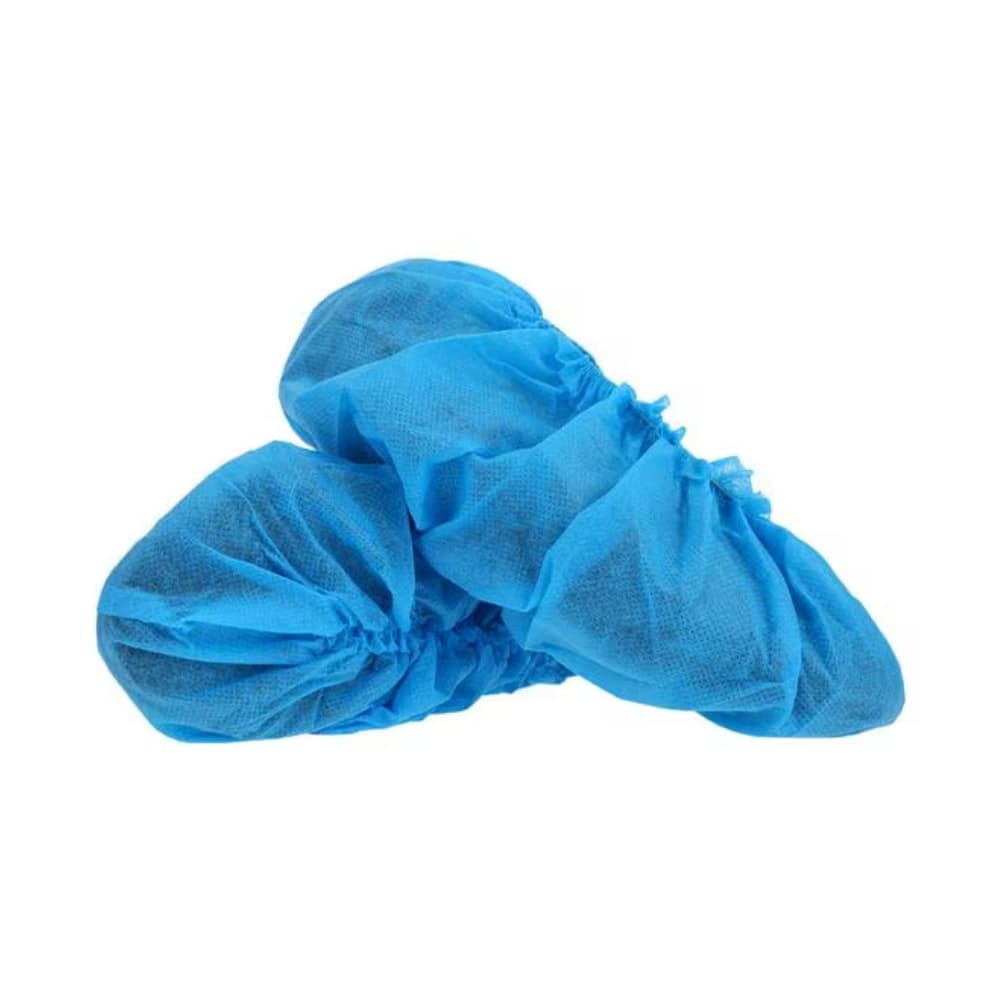
Non-woven versus PE: breathable or waterproof
The main choice is material, and it comes down to whether the zone is wet. Non-woven shoe covers are made from breathable spunbond fabric; they are comfortable over a full shift and right for dry and mid-care areas — packing, assembly, inspection — where the task is to control what is tracked, not to repel liquid. PE shoe covers are made from polyethylene and are fully waterproof; they are the choice for wet processing — butchery, evisceration, chilling, washdown — where a fabric cover would soak through in minutes. Most plants run both and assign each to defined zones, which is the correct outcome rather than a failure to standardise.
When you need a boot cover instead
A shoe cover protects the shoe and a little above it. Where operators stand in standing water, hose down equipment, or work the wettest stations, that is not enough — water runs in over the top. A boot cover extends waterproof coverage up the calf and is the right call for deep-wet meat, fish and washdown areas. The rule of thumb is simple: if the floor is wet enough that liquid could run into a low cover, specify a boot cover for that zone rather than fighting it with a shoe cover.
'Sterile', 'aseptic' or disposable: what to ask a supplier for
Buyers routinely ask suppliers for sterile or aseptic shoe covers for the food industry, and the wording is rarely corrected, so it is worth being clear. Disposable shoe covers for food processing are clean, single-use barriers suitable for use in HACCP-controlled environments — they control cross-contamination between zones. They are not sterile medical devices. Genuine sterility is a separate, validated product class, typically irradiated and certified for specific pharmaceutical or medical settings, and it is rarely what a food plant actually needs. For food hygiene, a clean single-use cover matched to the zone does the job; specifying 'sterile' where it is not required adds cost without adding food safety. Ask a supplier for clean, single-use covers in the right material for the zone, and reserve validated sterile product for the settings that genuinely require it.
Specifying by zone
The practical approach is to map covers to zones rather than buying one type for the whole site:
- Dry and mid-care (packing, assembly, inspection): breathable non-woven shoe covers.
- Wet processing (butchery, evisceration, chilling): waterproof PE shoe covers.
- Deep-wet and washdown (standing water, hosing): PE boot covers up the calf.
- Visitor and contractor entry: a light non-woven cover kept at the door.
Buying from a manufacturer or distributor
Whether you are a food producer specifying for your own plant or a distributor sourcing for customers, buying disposable shoe covers factory-direct keeps specification consistent and cost predictable across every reorder. As a manufacturer and exporter, Disponord supplies non-woven and PE shoe covers, and boot covers, in bulk across Europe and the Gulf. Tell us your zones and volumes and we can help you match materials to areas and set up dependable resupply, so foot-protection cover never runs short mid-shift.
Frequently asked questions
- What is the difference between PE and non-woven disposable shoe covers?
- Non-woven covers are breathable and suit dry and mid-care zones where comfort matters and the task is controlling what is tracked across the floor. PE covers are waterproof and are used in wet processing and washdown areas where a fabric cover would soak through.
- Are disposable shoe covers sterile?
- Standard disposable shoe covers for food use are clean, single-use barriers suitable for HACCP-controlled environments, not sterile medical devices. Covers offered as 'aseptic' for food use are generally the same clean single-use product under a different label. Genuine sterile covers are a separate, validated product class and are rarely required for food hygiene.
- When should I use a boot cover instead of a shoe cover?
- Use a boot cover wherever there is standing water or heavy washdown and liquid could run in over the top of a low shoe cover — typically deep-wet meat, fish and cleaning areas. A boot cover extends waterproof coverage up the calf.
Related products
- Foot Protection
PE Shoe Covers
Waterproof PE disposable shoe covers for wet food processing zones — controls floor cross-contamination in meat, seafood and dairy areas. Bulk supply.
View product → - Foot Protection
Non-woven Shoe Covers
Breathable non-woven disposable shoe covers for dry food processing and packaging zones — bulk supply from a manufacturer and exporter.
View product → - Foot Protection
Disposable Boot Covers
Waterproof, anti-slip polyethylene boot covers for slaughterhouses and wet food plants — full lower-leg coverage, bulk packaging for facility use.
View product →
Need disposable PPE for your facility?
Send us your requirement and we'll get back to you with a quote.
Request a Quote