
Industry guides
Disposable PPE for Central Kitchens and Ready-Meal Plants: What to Issue in Each Zone
17 October 2026 · 4 min read · Disponord
A zone-by-zone guide to disposable PPE for central kitchens, catering production and ready-meal plants: what to issue in prep, cooking, chilling, packing and dispatch, and how to plan for peaks.
Key takeaways
- Issue PPE by zone, not by job title: prep, cooking, chilling, packing and dispatch each carry a different contamination risk and a different wear time.
- Packing and portioning of cooked, chilled food is the zone where hair, sleeve and apron control matters most, because nothing afterwards kills what gets in.
- Plan volumes from headcount, shift length and change frequency, then add a buffer for peak weeks, since central kitchens often scale up quickly with temporary staff.
- Treat visitors and contractors as a separate, fully disposable stream issued at the entry point.
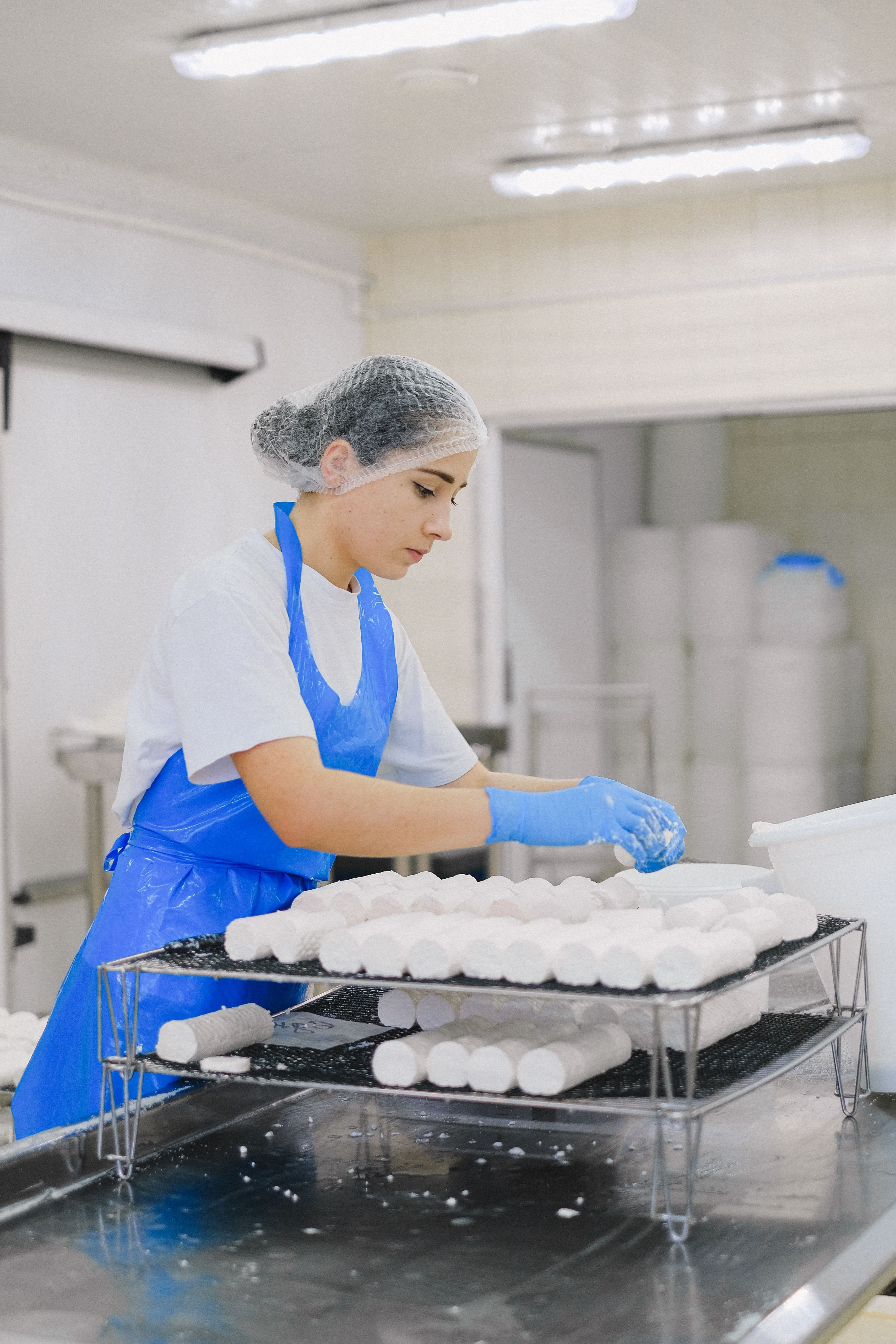
A central kitchen or ready-meal plant looks like a restaurant kitchen on the surface, but the hygiene problem is closer to a food factory. Food is produced in volume, cooked, chilled and packed for people who will eat it hours or days later, often without further cooking. Staff numbers swing with the order book, agency workers come and go, and the same building handles raw ingredients and ready-to-eat product. Disposable PPE suits this pattern well, because it can be issued fresh at the door, scaled up in a busy week and disposed of at the zone boundary. This guide sets out what to issue where.
Why these sites need a zone approach
A single PPE rule for the whole building is either too light for the packing hall or wasteful in the dry store. The sensible approach is to map the flow of product and match PPE to the risk at each stage. The main question is what happens to the food after the zone: if it is cooked afterwards, a stray hair is a quality problem; if it is packed ready to eat, it is a food safety problem. Your own HACCP plan and customer requirements should drive the final map.
What to issue in each zone
| Zone | Typical disposable PPE | Notes |
|---|---|---|
| Raw prep (meat, fish, vegetables) | Hair net, PE apron, sleeve covers, shoe covers or boot covers | Wet work: PE aprons and sleeve covers keep splashes off clothing; replace after raw-meat tasks |
| Cooking | Hair net, beard cover where needed, light apron | Heat and steam: choose breathable items and change when damp |
| Chilling and blast chilling | Hair net, sleeve covers, clean apron | Cooked product is exposed here, so treat it as a clean zone |
| Portioning and packing (ready to eat) | Hair net, beard cover, non-woven sleeve covers, fresh apron, mask where your rules require | Highest control: change at every entry and after breaks |
| Dispatch and cold store | Hair net, shoe covers, light outer layer | Lower product exposure, but keep the discipline to avoid tracking dirt inward |
Colour coding by zone makes the map visible on the floor. A different hair net or apron colour for raw and cooked areas lets supervisors spot someone in the wrong place at a glance.
Issue rules that work in practice
- Issue at a single entry station for each zone, with a dispenser for hair nets and shoe covers at hand height.
- Change aprons and sleeve covers when moving from raw to cooked areas, and after any visible soiling.
- Dispose of PPE at the zone exit, never carry it into the canteen or toilets.
- Keep one lined bin per exit so used items cannot return to the floor.
- Brief agency and temporary staff on the rules on their first shift, using the same station as everyone else.
Peak-season and volume planning
Demand in catering and ready-meal production is uneven: holiday periods, large events and new retail listings can double output within weeks. PPE consumption follows headcount and shift pattern, so plan it from those, not from last month's invoice alone.
- Count the people working in each zone per shift, including temporary staff expected at peak.
- Multiply by the number of changes per shift for each item, for example one hair net per entry and aprons per task change.
- Multiply by working days, then add a safety buffer for breakage, spillage and extra visitors.
- Order ahead of the peak, allowing for typical delivery of 7 to 21 days in total, production and shipping combined.
- Review actual consumption weekly during the peak and adjust the next order.
Carton storage is part of the plan. A peak-week order needs dry space close to the entry stations, so do not leave it until the week before.
Visitors, auditors and contractors
Central kitchens host customer audits, retail buyers, maintenance contractors and delivery drivers. Treat them as a separate fully disposable stream: visitor gown or coverall, hair net, beard cover if needed, and shoe covers, issued at the reception or entry point and removed on the way out. Keep a small stock in assorted sizes, since a visit is rarely announced far ahead. Check your own audit scheme and local rules for what visitors must wear in high-care areas.
Specifying the right items
Ask for samples before you order in volume. For hair nets, check size, elastic comfort and visibility of colour. For aprons, check length and thickness against the wet tasks. For sleeve covers, check cuff elasticity so they stay in place during packing. Wear them through a full shift, in the zone where they will be used.
Disponord manufactures and exports disposable hygiene PPE for food plants, central kitchens and catering producers. Request a quote on our website with your monthly volumes and zones, and expect delivery typically in 7 to 21 days in total, production and shipping combined.
Frequently asked questions
- What disposable PPE does a central kitchen need at minimum?
- Most sites start with hair nets, PE aprons, sleeve covers and shoe covers, adding beard covers and masks where their own rules require. The right set depends on your zones and customer requirements, so map the product flow first.
- Do cooking areas need the same PPE as packing areas?
- Not usually. Cooked, ready-to-eat product is exposed in portioning and packing, so those zones need the strictest control. Cooking areas need breathable items that cope with heat and steam.
- How do we plan PPE for peak season?
- Count headcount per zone including temporary staff, multiply by changes per shift and working days, add a buffer, and order ahead of the peak. Track actual use weekly and adjust.
- Should agency staff use the same PPE as permanent staff?
- Yes. Use the same entry station and the same rules, with a short briefing on the first shift. Disposable PPE makes this easy because there is no personal garment to launder or track.
- How should we handle visitors in a ready-meal plant?
- Issue a full disposable set at the entry point, remove it on exit, and keep stock in several sizes. Check your own audit scheme and local rules for requirements in high-care areas.
Related products
- Head Protection
Disposable Hair Nets
Non-woven bouffant caps with double elastic band for food processing — breathable, controls hair contamination in production and packaging zones.
View product → - Arm Protection
Non-woven Sleeve Covers
Breathable non-woven sleeve covers with ultrasonic seams and elastic cuffs — for food handling, packaging and dry processing zones.
View product → - Body Protection
Disposable Visitor Gowns
Non-woven visitor gowns with velcro front and elastic cuffs for food processing plants — also used as a lab-coat-style disposable coat for staff and QA areas.
View product → - Body Protection
Disposable PE Aprons
Lightweight waterproof polyethylene aprons for food handling and wet processing — knee-length coverage for meat, dairy and packaging zones.
View product →

Need disposable PPE for your facility?
Send us your requirement and we'll get back to you with a quote.
Request a Quote