
Compliance & hygiene
What Visitors Must Wear in a Food Factory: A PPE Guide for Tours and Audits
16 October 2026 · 3 min read · Disponord
Hair net, beard cover, gown and shoe covers: the disposable PPE visitors, auditors and contractors need, and how to run visitor entry without gaps.
Key takeaways
- Visitors, auditors and contractors are normally held to the same hygiene rules as staff for the areas they enter.
- A complete visitor set covers head, beard, body and footwear: hair net, beard cover where needed, gown or coverall, and shoe covers.
- Entry works when dispensers are stocked at the door and the sequence of dressing is written down and followed.
Visitors are the part of a food plant that staff do not train every day. They arrive in street clothes and outdoor shoes, carry phones and notebooks, and walk through areas where product is open. For that reason auditors look closely at how visitors are dressed and recorded. This guide sets out the disposable PPE a visitor set should contain, how to organise entry, and what to stock so that the rule never fails for lack of an item.
The visitor set
- Hair net or bouffant cap covering all hair, including the nape and sideburns.
- Beard cover for any facial hair covered by your policy.
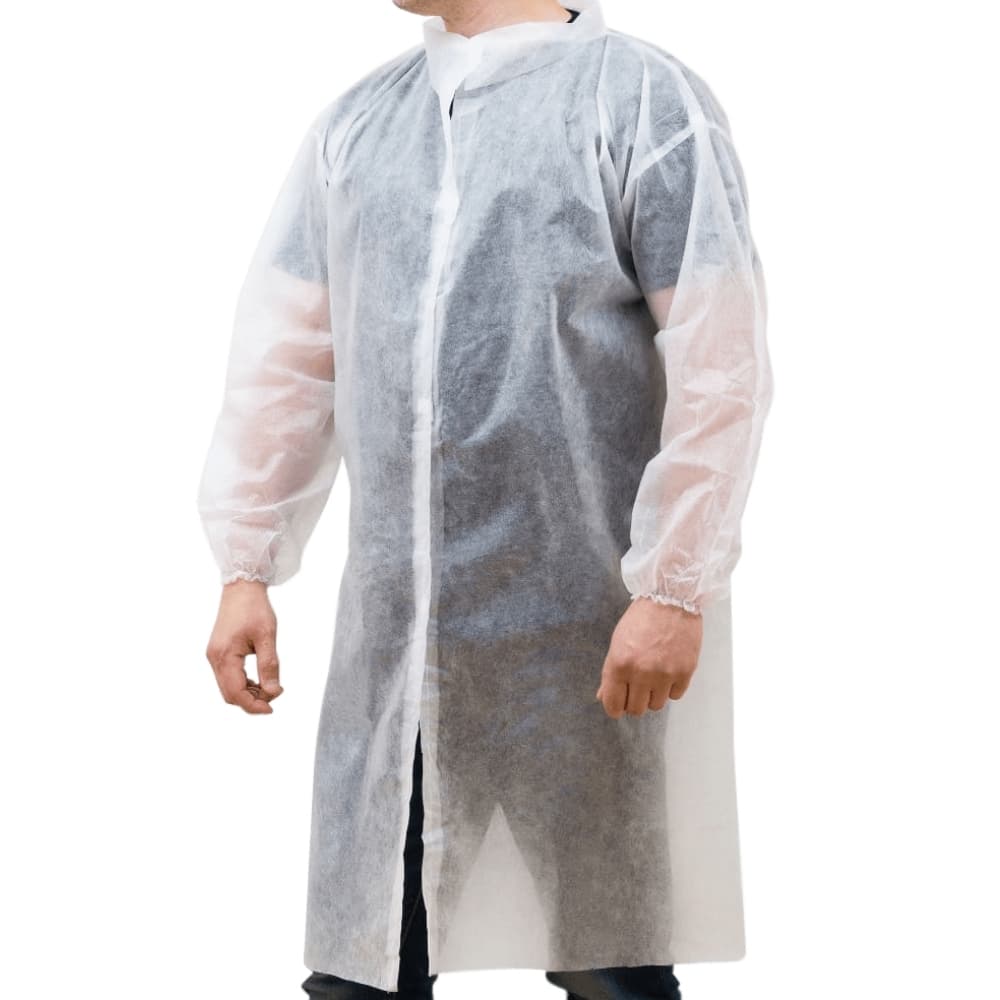
- Disposable gown, lab-coat-style coat or coverall that covers street clothing.
- Disposable shoe covers, or dedicated factory footwear where the plant provides it.
- Sleeve covers or an apron where the route passes open product or wet areas.
Sequence at the door
- Sign the visitor log and complete the hygiene induction.
- Remove jewellery, put loose items in a locker and leave personal items outside.
- Put on the hair net first, then the beard cover if needed.
- Put on the gown or coverall, then the shoe covers.
- Wash and sanitise hands before entering the production area.
Putting the hair net on first matters because fibre and hair fall from the head as the garment is put on. Shoe covers go on last, so they stay clean until entry.
Which garment for which route
| Route | Typical garment |
|---|---|
| Packing, dry areas, short tours | Lightweight gown or lab-coat-style coat in non-woven |
| Open-product areas, long visits | Coverall, with hair net and beard cover |
| Wet or washdown areas | PE apron over the gown, PE sleeve covers, boot covers |
| Maintenance and contractors | Coverall, with shoe or boot covers suited to the area |
Contractors and auditors
Contractors and maintenance staff often cause the largest hygiene gaps because they carry tools and move between areas. Hold them to the same rule as visitors, brief them before entry, and check tools and loose items. Auditors expect to be treated like any other visitor, and many will check the set that is issued, so stock sizes that fit and keep dispensers full.
Stock and dispose at the boundary
Keep dispensers at the entry point, stocked and clean, with a disposal bin at the exit. Items are removed and discarded at the zone boundary, never carried out or reused. Colour coding the visitor set differently from staff PPE makes visitors easy to identify across the site.
Records an auditor expects
- A visitor log with name, company, date, time in and time out, and confirmation of the hygiene induction.
- A written visitor hygiene rule that states the PPE required for each route.
- Evidence that the rule is applied, such as signed declarations on health and illness, or a checked entry sequence.
- Records of contractor briefings, including rules on tools and loose items.
Short tours and long visits
A short walk through a packing hall needs less than a long audit through open-product areas. Define two or three standard visitor sets, for example a light set for dry areas, a full set for open-product routes and a wet-zone set that adds an apron, sleeve covers and boot covers. Pre-packing the sets in labelled bags speeds up entry, keeps the sequence consistent and reduces the chance that an item is forgotten.
Disponord supplies disposable visitor gowns, coveralls, hair nets, beard covers, shoe covers and sleeve covers for food processing in bulk, with typical delivery of 7 to 21 days in total, production and shipping together. Send your visitor numbers and we will propose a set and a monthly quantity.
Browse all compliance & hygiene guides →
Frequently asked questions
- Do visitors need the same PPE as staff in a food factory?
- In general yes, for the areas they enter. Most hygiene policies and audits expect visitors, auditors and contractors to follow the same rules as staff.
- What order should visitors put on PPE?
- Hair net first, then a beard cover if needed, then the gown or coverall and shoe covers, followed by hand washing. This keeps hair and fibre contained and the shoe covers clean until entry.
- How many visitor sets should a plant keep in stock?
- Base it on visitors and contractors per week, plus audit peaks, and hold a safety stock. A visitor set uses a hair net, a gown or coverall and shoe covers each time.
Related products
- Head Protection
Disposable Hair Nets
Non-woven bouffant caps with double elastic band for food processing — breathable, controls hair contamination in production and packaging zones.
View product → - Face Protection
Disposable Beard Covers
Single-use non-woven beard covers with a single elastic loop — for food processing, meat plants and food service kitchens.
View product → - Foot Protection
Non-woven Shoe Covers
Breathable non-woven disposable shoe covers for dry food processing and packaging zones — bulk supply from a manufacturer and exporter.
View product → - Body Protection
Disposable Visitor Gowns
Non-woven visitor gowns with velcro front and elastic cuffs for food processing plants — also used as a lab-coat-style disposable coat for staff and QA areas.
View product →

Need disposable PPE for your facility?
Send us your requirement and we'll get back to you with a quote.
Request a Quote