
Compliance & hygiene
Disposable PPE Checklist for Food Safety Audits (BRCGS, IFS, FSSC 22000)
7 October 2026 · 3 min read · Disponord
A practical checklist for disposable PPE in food-plant audits: hair and beard restraints, aprons, shoe covers, visitors, colour coding and records.
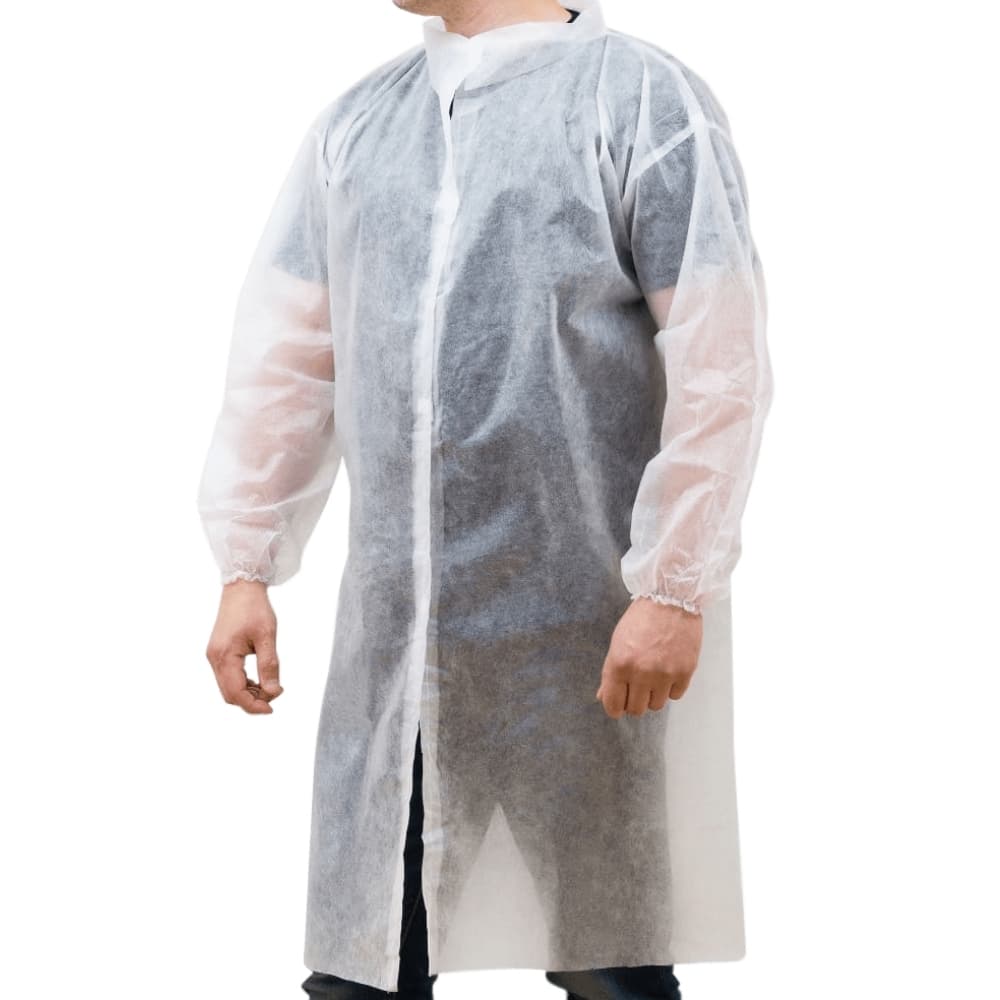
Auditors rarely ask whether you own PPE. They check how it is selected, issued, worn, replaced and controlled. Many non-conformities in personal hygiene are procedural: hair not fully covered, PPE worn outside the zone, no record of how visitors are controlled. This checklist covers the disposable PPE items auditors look at, written for plants working to BRCGS Food Safety, IFS Food or FSSC 22000 (which builds on ISO 22000 and prerequisite programmes such as ISO/TS 22002-1).
A note on scope: PPE itself is not "certified" under these schemes. What is assessed is your documented system and your daily practice. Always check the current version of the standard and your customer's own requirements.
1. Written policy
- A documented personal hygiene and protective clothing policy that names the PPE required for each area.
- Rules for hair, beards, jewellery, fingernails and pockets in open-product areas.
- Rules for visitors, contractors and maintenance staff, not only production employees.
- A clear procedure for what to do when PPE is damaged, contaminated or missing.
2. Hair and beard restraints
- All hair covered, including at the nape and sideburns, by a hair net or bouffant cap.
- Facial hair covered according to your written length rule. See Beard Net vs Beard Cover vs Beard Snood.
- Restraints put on before entering the production area, not at the production door.
- Spare supplies available at entry points, so a missing item never becomes a reason to enter without it.
3. Body protection
- Aprons or gowns selected to the task: PE for wet product contact, non-woven for dry or light-contact areas.
- Sleeve covers where forearms contact product or equipment.
- Coveralls or gowns for visitors and contractors, replacing street clothing.
- Single-use items are disposed of at the zone boundary and never reused or carried across.
4. Footwear
- Dedicated factory footwear or disposable shoe and boot covers by zone.
- A footwear change or cover point at each zone transition, with a barrier or bench where the plant requires one.
- Boot covers or boots for wet and high-risk areas. See Shoe Covers vs Boot Covers.
5. Colour coding
- A documented colour system by zone or risk level, with colours defined in the procedure.
- Colour used consistently across hair nets, aprons and covers, so a person in the wrong area is easy to spot.
- Training so staff know what each colour means. More detail in Colour-Coding Disposable PPE by Zone.
6. Dispensing and storage
- PPE stored clean, closed and off the floor, in its original packaging until use.
- Dispensers at the right points, kept stocked.
- Stock rotation so older cartons are used first and damaged packs are removed.
7. Visitors and contractors
- A visitor log, plus an induction on hygiene rules before entry.
- Visitors issued the same head, body and foot protection as staff for the area.
- Contractors briefed on PPE and on rules for tools and loose items.
8. Records and verification
- Supplier approval records for PPE: specification, material and supplier contact.
- Training records for hygiene and PPE use.
- Internal audit or hygiene inspection records showing that practice matches policy.
- Corrective actions when a failure is found, and evidence the cause was addressed.
9. Common findings to avoid
- Hair visible at the nape or sideburns despite a hair net.
- Beard covers pulled down below the nose or worn on the chin only.
- Shoe covers worn across a zone boundary without changing.
- Mixed colours in one area, with no one able to explain what they mean.
- Visitors admitted without the PPE the policy requires.
- PPE stored open, on the floor or beside chemicals.
How single-use PPE helps
Disposable PPE reduces what has to be controlled: no laundering process to validate, no wear-and-tear to inspect, no cross-contamination from a shared garment. It is also simple to demonstrate in an audit, because issue and disposal are visible on the floor. For more on this, see How Single-Use Hygiene Supports a HACCP-Controlled Environment.
Supplying your facility
Disponord supplies disposable hair nets, beard covers, aprons, sleeve covers, shoe and boot covers, visitor gowns and coveralls for food processing facilities, in the colours and specifications your zoning requires. Send us your zone list and we will propose a consistent range.
Browse all compliance & hygiene guides →
Frequently asked questions
- Does disposable PPE need a certificate for a BRCGS or IFS audit?
- The schemes assess your system and its implementation, not the PPE as a certified product. Keep supplier and specification records and be ready to show how the PPE is controlled.
- Are hair nets enough, or do I need a bouffant cap?
- Either can meet the requirement if all hair is covered. The choice depends on hair length, comfort and your policy.
- Do visitors need the same PPE as staff?
- Yes, for the areas they enter. Most audits expect visitors to be held to the same hygiene rules.
- How do I show that PPE is controlled?
- Through a written policy, training records, supervision and inspection records, and consistent practice on the floor.
Related products
- Head Protection
Disposable Hair Nets
Non-woven bouffant caps with double elastic band for food processing — breathable, controls hair contamination in production and packaging zones.
View product → - Face Protection
Disposable Beard Covers
Single-use non-woven beard covers with a single elastic loop — for food processing, meat plants and food service kitchens.
View product → - Foot Protection
Non-woven Shoe Covers
Breathable non-woven disposable shoe covers for dry food processing and packaging zones — bulk supply from a manufacturer and exporter.
View product → - Body Protection
Disposable Visitor Gowns
Non-woven visitor gowns with velcro front and elastic cuffs for food processing plants — also used as a lab-coat-style disposable coat for staff and QA areas.
View product →

Need disposable PPE for your facility?
Send us your requirement and we'll get back to you with a quote.
Request a Quote