
Compliance & hygiene
Colour-Coding Disposable PPE by Zone in Food Plants
1 October 2026 · 2 min read · Disponord
Colour-coding turns PPE from a rule people have to remember into one they can see. How to set up a zone-based colour system for disposable hair nets, sleeve covers and shoe covers.
Key takeaways
- A colour system makes a zone breach visible at a glance, without anyone needing to remember a rule.
- There is no single universal standard, so most plants follow site rules or customer requirements.
- Pick one scheme, document it and apply it across every site, rather than letting each shift improvise.
In a busy food plant, hygiene rules fail at the edges: someone walks from a raw area into a packed-product area wearing the wrong gear, and nobody notices until an audit. Colour-coding is a low-cost way to make those breaches visible. If operators in the raw zone wear one colour and operators in the finished-goods zone wear another, a person in the wrong place is obvious to anyone looking. This guide explains how to set up a colour-coding system for disposable PPE, what to code, and how to keep it working over time.
What colour-coding is for
Colour-coding does not make PPE cleaner. What it does is make zone discipline visible. It converts an invisible rule — do not take raw-side items into the clean side — into something a supervisor can enforce from across the room. It also helps in training: new starters learn which colour belongs where in a day rather than a month.
Which items to colour-code
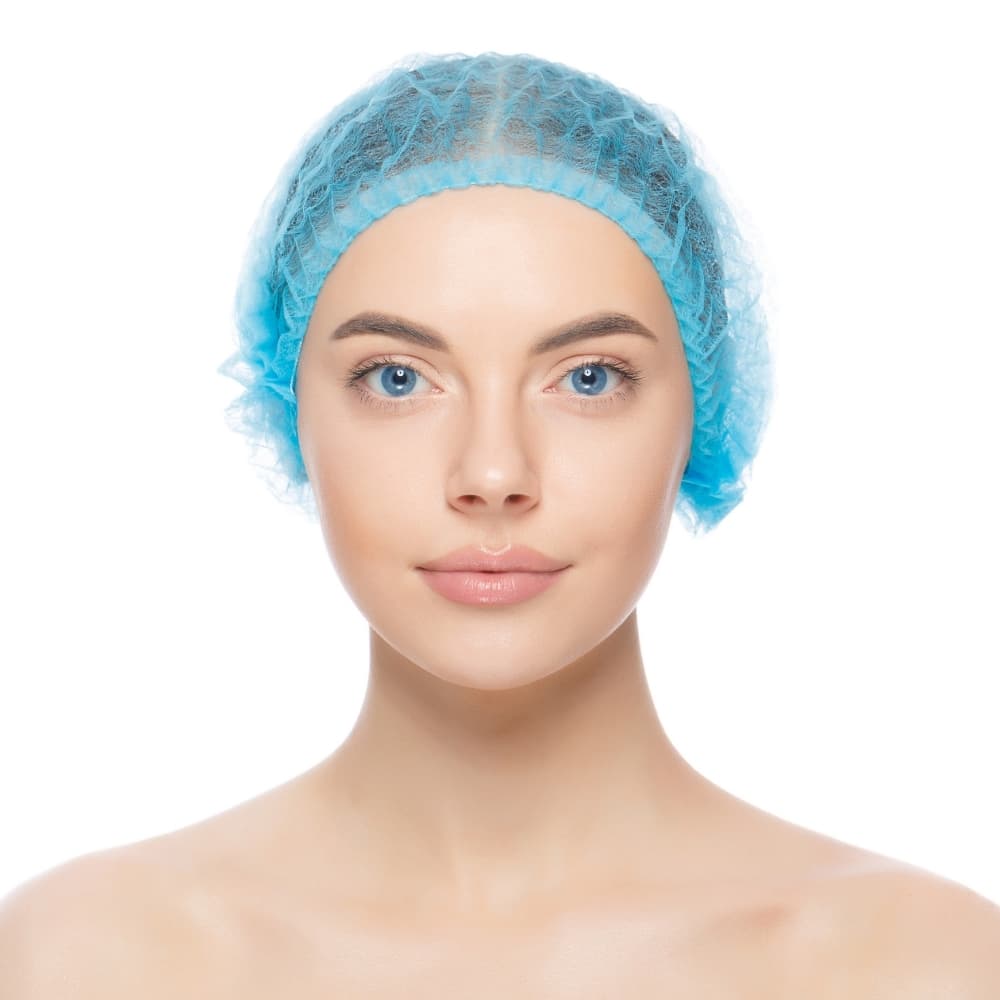
Start with the items that are most visible and most often swapped. Disposable hair nets are available in six colours — yellow, burgundy, red, blue, white and green — which makes them the easiest item to use as a zone marker, because they sit at head height and are visible from any direction. Non-woven shoe covers and non-woven sleeve covers come in blue and white, which suits a simple two-zone scheme.
Building a scheme
There is no single universal standard for which colour means what. Some customers and retailers specify colour schemes for their suppliers, and some sites inherit conventions from earlier practice. The important thing is not which colour you choose but that you choose one scheme, write it down and apply it consistently. A typical layout assigns one colour to raw or high-risk areas, another to finished-goods and packing areas, another to visitors and maintenance, and one more to any allergen-controlled zone.
- Raw and high-risk areas — one dedicated colour, not used anywhere else
- Cooked, packed or finished-goods areas — a different colour
- Visitors, auditors and contractors — a separate colour so they are identifiable
- Maintenance and cleaning staff — a separate colour if they move across zones
Keeping the system working
A colour scheme decays quickly if supply is inconsistent. If the blue hair nets run out and someone issues white instead, the code loses meaning. Keep a buffer of every colour in the scheme and make restocking someone's named responsibility. Check the scheme at audit and training, and update the written procedure whenever the colours or zones change. Disponord manufactures and exports single-use hygiene consumables suitable for HACCP-controlled environments and can supply the colours your scheme needs in bulk. Send us your zone plan and required colours through the quote form.
Browse all compliance & hygiene guides →
Frequently asked questions
- What colour hair nets should be used in food processing?
- There is no single standard. Plants choose their own colour scheme, often guided by customer requirements, and apply it consistently by zone. Blue and white are common, and hair nets are also made in other colours so that more zones can be separated.
- Why colour-code PPE in a food plant?
- It makes zone breaches visible at a glance. A person wearing the wrong colour in a zone is obvious to a supervisor, which turns an invisible rule into something that can be enforced and audited easily.
Related products
- Head Protection
Disposable Hair Nets
Non-woven bouffant caps with double elastic band for food processing — breathable, controls hair contamination in production and packaging zones.
View product → - Foot Protection
Non-woven Shoe Covers
Breathable non-woven disposable shoe covers for dry food processing and packaging zones — bulk supply from a manufacturer and exporter.
View product → - Arm Protection
Non-woven Sleeve Covers
Breathable non-woven sleeve covers with ultrasonic seams and elastic cuffs — for food handling, packaging and dry processing zones.
View product →
Need disposable PPE for your facility?
Send us your requirement and we'll get back to you with a quote.
Request a Quote