
Compliance & hygiene
EU Rules for Disposable PPE and Hygiene Clothing in Food Plants
12 October 2026 · 5 min read · Disponord
Which EU rules actually apply to disposable hair nets, aprons and shoe covers in a food plant, and which documents to ask a supplier for before you approve them.
Key takeaways
- Three separate EU frameworks touch disposable PPE: food hygiene law, the PPE Regulation and food contact rules, and each asks a different question.
- Items worn to protect the food, such as hair nets and shoe covers, are usually hygiene clothing; items worn to protect the wearer from defined minimal risks can be Category I PPE.
- Before approving a supplier, ask in writing for the intended use, any EU declaration of conformity or food contact declaration, the material specification and batch traceability.
Listings for disposable PPE are full of short claims: CE, food safe, EU compliant, food grade. Few of them say which rule is meant, and buyers are left guessing which documents to ask for. The reason is that three separate EU frameworks touch these products, and each one asks a different question. This guide explains what each of them covers for hair nets, aprons, sleeve covers, shoe covers and coveralls used in food plants, which documents are worth requesting from a supplier, and what an auditor is likely to look at. It is general information, not legal advice.
Three rules, three different questions
It helps to separate the three before looking at any product.
- Food hygiene law, Regulation (EC) No 852/2004: asks what the food business does. Annex II, Chapter VIII requires people working in food-handling areas to keep a high standard of personal cleanliness and to wear suitable, clean and, where necessary, protective clothing. The duty sits with the plant, and no product is approved under it.
- The PPE Regulation, (EU) 2016/425: asks whether equipment protects the person wearing it. It covers equipment designed and manufactured to be worn or held for protection against risks to that person's health or safety, and it brings CE marking and a declaration of conformity with it.
- Food contact rules, Regulation (EC) No 1935/2004 and, for plastics, Commission Regulation (EU) No 10/2011: ask whether a material can transfer substances to food. They apply to articles intended to touch food, or that can reasonably be expected to.
Is a hair net PPE? It depends on whom it protects
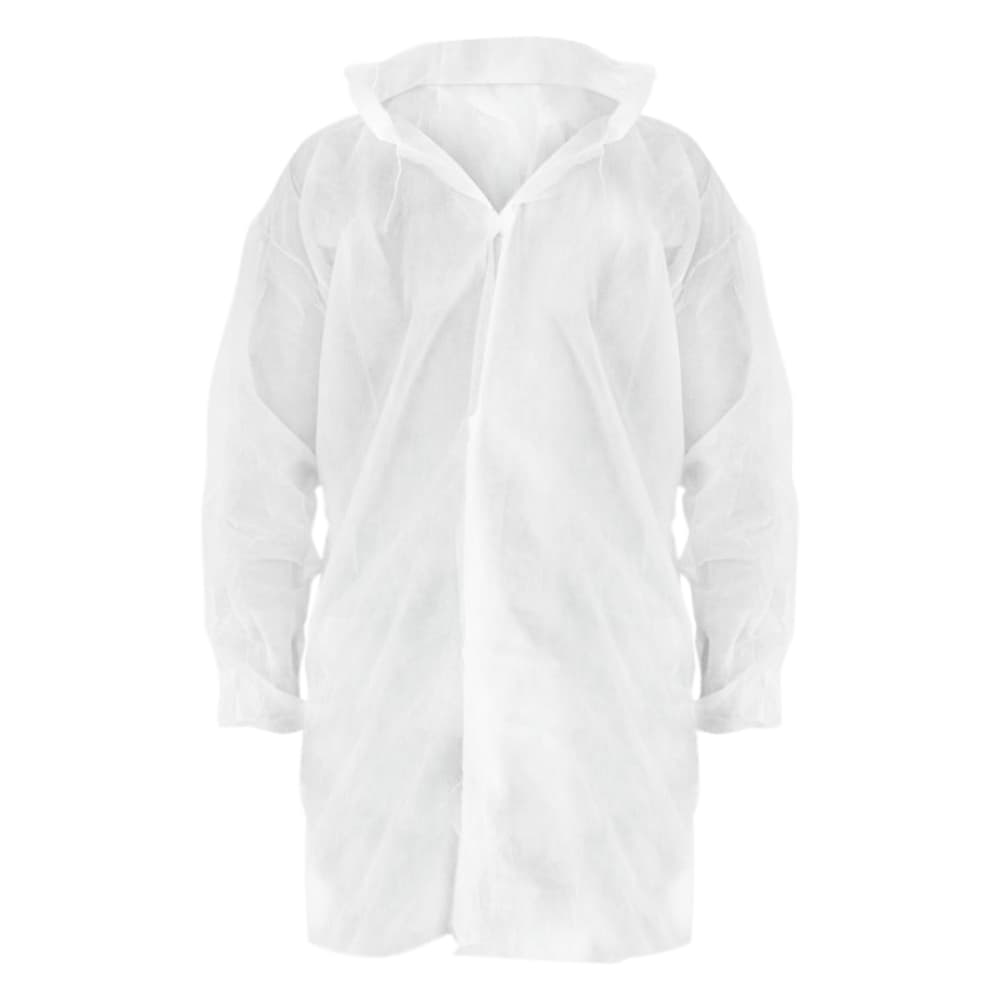
A hair net, beard cover or shoe cover worn to keep hair, fibre and dirt off the product protects the food, not the wearer. That makes it hygiene clothing, and such items are usually treated as outside the PPE Regulation, whose definition is built around risks to the wearer. Aprons, sleeve covers, gowns and coveralls sit closer to the line. If the manufacturer positions them as protecting the wearer against defined risks, they can fall under the Regulation as Category I, which covers minimal risks only: for example superficial mechanical injury, contact with cleaning materials of weak action, prolonged contact with water and contact with hot surfaces not exceeding 50 °C.
For Category I the usual route is self-assessment by the manufacturer, followed by a technical file, CE marking and an EU declaration of conformity that either accompanies the product or can be reached through an internet address given in the instructions. Importers into the EU must keep a copy of the declaration for ten years. A garment that carries none of this is not automatically non-compliant, because the manufacturer may not position it as PPE at all. That is why the intended use, stated by the supplier, is the first thing to establish.
Food contact: where the rules are less clear
The framework regulation applies to articles that are intended to touch food, are already in contact with it for that purpose, or can reasonably be expected to touch food or release constituents into it under normal use. Such articles must not endanger health, change the composition of the food unacceptably or spoil its taste, smell or appearance, and businesses must be able to trace where the material came from. Gloves are the obvious case. A hair net or shoe cover does not touch food. An apron or sleeve cover may brush against product on a packing line, and that is where buyers and auditors differ on how far the rules reach.
For plastic items such as PE aprons and PE sleeve covers, the reference is the plastics regulation. It sets a Union list of authorised substances, migration limits, including an overall migration limit of 10 mg per dm², and requires a written declaration of compliance. Whether it applies to a given apron depends on whether the item counts as a food contact article, which is a decision for the manufacturer and the buyer's food safety team. In practice many customers ask for the declaration for any plastic item that may touch product, and a clear written answer from the supplier removes the doubt.
What to ask a supplier before approving a product
- What is the intended use of each item: hygiene clothing, PPE, or both?
- If it is sold as PPE: which category, is it CE marked, and can I see the EU declaration of conformity?
- If it may touch food: is there a food contact declaration of compliance and, for plastics, is it written against Regulation (EU) No 10/2011?
- What is the material specification: polymer and thickness in microns for PE, or fabric type and weight in g/m² for non-woven?
- Which legal entity and address appear on the documents, and is that entity the manufacturer?
- How are cartons batch-marked, so a complaint can be traced back to a production lot?
Ask for the answers in writing and keep them in the supplier approval file. A verbal assurance does not help in an audit.
What auditors look at
Schemes such as BRCGS Food Safety, IFS Food and FSSC 22000 assess your system, not the product as a certified item. For disposable PPE that usually means a documented policy on protective clothing, a supplier approval record with the specification, and evidence that practice on the floor matches the policy. The documents above strengthen the supplier file, but the audit result still depends on how the PPE is controlled and used. See the Disposable PPE Checklist for Food Safety Audits for the full list, and the Buyer's Guide for the export documents that travel with a shipment.
What Disponord supplies
Disponord supplies disposable hair nets, PE aprons, non-woven sleeve covers, coveralls, beard covers, shoe and boot covers and visitor gowns for food processing facilities. Tell us through the quote form which documents your site requires, and we will confirm in writing what can be supplied for each item. Check requirements with your food safety lead, your customer and your national authority, since national rules and customer standards can add to what is described here.
Browse all compliance & hygiene guides →
Frequently asked questions
- Do disposable hair nets need CE marking?
- CE marking under the PPE Regulation applies to equipment designed to protect the wearer. A hair net worn to keep hair out of food protects the product, so it is normally treated as a hygiene item rather than PPE. The manufacturer defines the intended use, so ask the supplier how each item is classified and get the answer in writing.
- Do disposable aprons need to be food contact compliant?
- It depends on whether the apron can reasonably be expected to touch food and on your customer's requirements. Where it may, ask the supplier for a food contact declaration. For PE aprons the usual reference is Regulation (EU) No 10/2011.
- What is PPE Category I?
- It is the lowest risk category in the PPE Regulation, covering only minimal risks to the wearer, such as superficial mechanical injury or prolonged contact with water. It is separate from food contact compliance, which is about whether a material can transfer substances to food. An item can be neither, one or both.
- What is an EU declaration of conformity?
- It is a statement signed by the manufacturer that a PPE product meets Regulation (EU) 2016/425. It must accompany the product or be reachable through an internet address in the instructions.
Related products
- Head Protection
Disposable Hair Nets
Non-woven bouffant caps with double elastic band for food processing — breathable, controls hair contamination in production and packaging zones.
View product → - Arm Protection
Non-woven Sleeve Covers
Breathable non-woven sleeve covers with ultrasonic seams and elastic cuffs — for food handling, packaging and dry processing zones.
View product → - Body Protection
Disposable PE Aprons
Lightweight waterproof polyethylene aprons for food handling and wet processing — knee-length coverage for meat, dairy and packaging zones.
View product → - Body Protection
Disposable Coveralls
Non-woven coveralls with front zipper closure — full-body contamination barrier for food processing, packaging and production zones.
View product →
Need disposable PPE for your facility?
Send us your requirement and we'll get back to you with a quote.
Request a Quote