
Products & specs
Disposable Coveralls for Food Plants: Non-Woven, Laminated and What to Specify
7 October 2026 · 3 min read · Disponord
How to choose disposable coveralls for food processing: non-woven vs laminated, gram weights, hood and seams, and when an apron is enough.
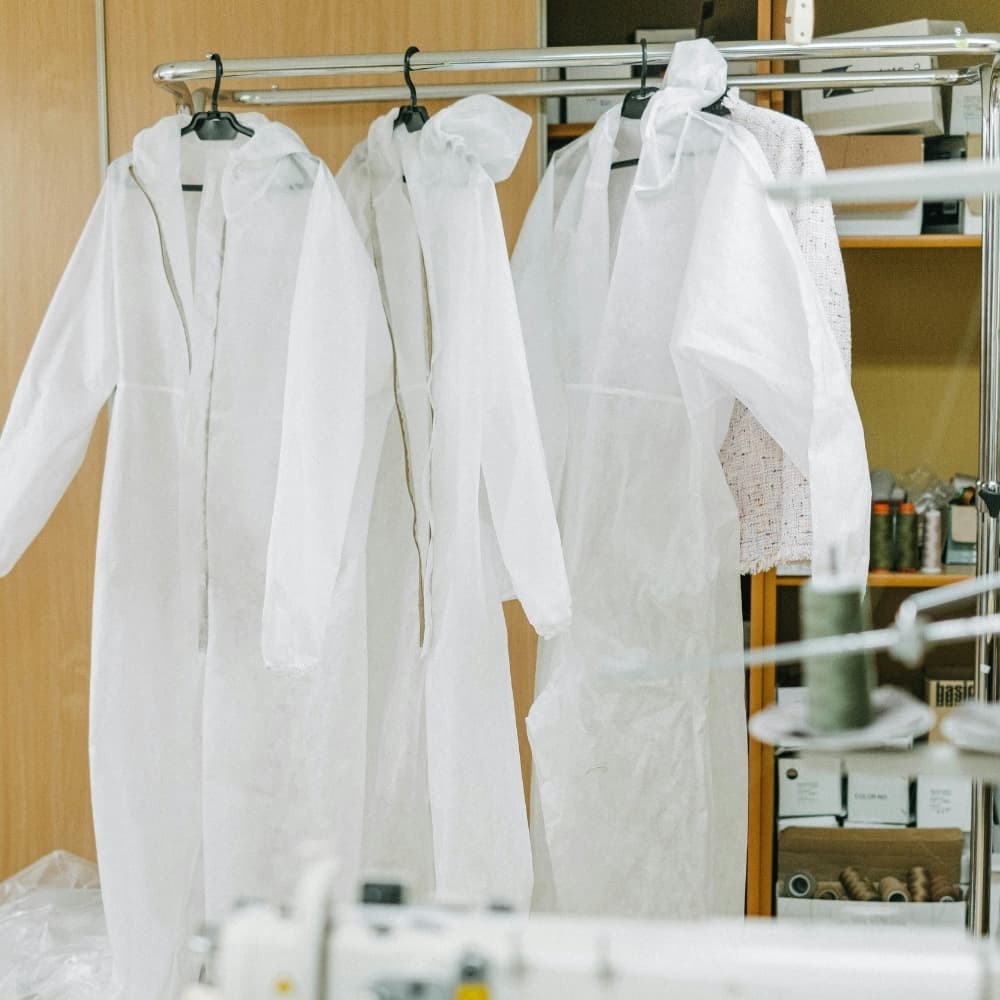
A disposable coverall is the most complete single-use garment in a food plant: one piece covering torso, arms and legs. It is also one of the most mis-specified, because buyers compare coveralls by price per piece without checking fabric weight, construction or what the garment is actually protecting. This guide covers what matters.
When a coverall is the right choice
Aprons and sleeve covers protect clothing from splashes and from product contact. A coverall goes further, creating a full barrier between a worker's own clothing and the production environment. In food plants that is typically justified for:
- Visitors, auditors and contractors who enter production in street clothes.
- Maintenance and engineering staff moving between zones.
- Open-product areas where clothing fibre is a contamination concern.
- Cold rooms or packing areas where a lightweight outer layer is required.
If the only goal is protecting the front of the body from wet product, a PE apron is cheaper and cooler to wear.
Fabric: the main specification decision
| Type | Typical weight | Properties | Where it fits |
|---|---|---|---|
| Non-woven spunbond | 25 to 35 g/m² | Light, breathable, soft, dry-contact barrier | Visitors, dry packing, light-duty hygiene |
| Laminated non-woven | around 55 g/m² | Water-resistant film layer, better dust and splash barrier, less breathable | Wet-adjacent zones, dusty work, heavier tasks |
| Premium protective fabrics (e.g. Tyvek-type) | around 55 g/m² | Strong barrier, low linting, high comfort | Specialised or higher-risk areas |
Heavier is not automatically better. A laminated coverall protects against splash and dust but traps heat, and workers in warm areas will unzip or remove it, which defeats the purpose. Match the fabric to the task and the temperature of the room.
Construction details that matter
- Closure: a full-length front zip with a storm flap gives easy donning and a better seal.
- Hood: a hooded coverall covers the head fully but must still be worn together with a hair net and, where relevant, a beard cover. Hoodless versions are common for visitor use.
- Elastic at wrists, ankles and waist: reduces gaps where contamination can enter or fibres can escape.
- Seams: sewn seams are standard; bound or taped seams improve the barrier for dust and splashes.
- Size range: check the full size run. A coverall that is too small restricts movement and splits at the seams, a common cause of early failure.
- Colour: white is the usual default; blue gives better contrast with food products. Align colours with your zone coding if you use it.
Coveralls are not chemical protective suits
A hygiene coverall protects product from people and people from light contamination. It is not rated for hazardous chemical exposure unless it is specifically certified as protective clothing, and you should not use a standard hygiene coverall for tasks that involve hazardous substances. For food-plant work, the right frame is hygiene barrier, not chemical protection.
Cost per use, not cost per piece
A cheaper coverall that tears during a shift gets replaced mid-task and costs more than a sturdier one used once. When comparing offers, check fabric weight, seam construction and zip quality, not only price. For visitors who wear one for a short walk-through, a light non-woven coverall is entirely appropriate. For maintenance staff working a full shift, a stronger weight is worth the difference.
What Disponord supplies
Disponord's standard disposable coverall is made of 30 g non-woven spunbond with a front zipper closure, in white, suitable for food processing, packaging and production zones. See the Disposable Coveralls page for current specifications, or contact us with your application and zone type for a recommendation.
Browse all products & specs guides →
Frequently asked questions
- What is the difference between non-woven and laminated coveralls?
- Non-woven coveralls are breathable and light, suitable for dry contact. Laminated coveralls add a film layer that resists splashes and dust but is warmer to wear.
- Should a disposable coverall have a hood?
- Use a hooded coverall when full head coverage is needed, together with a hair net. Hoodless versions suit visitors and areas where a separate head covering is already required.
- Can disposable coveralls replace aprons?
- For full-body coverage yes, but aprons are cheaper and cooler for tasks that only involve front-of-body splash. Many plants use coveralls for visitors and maintenance and aprons for line workers.
- Are disposable coveralls reusable?
- They are designed for single use. Reusing them removes the hygiene benefit and the seams usually weaken after one shift.
Related products
- Body Protection
Disposable Visitor Gowns
Non-woven visitor gowns with velcro front and elastic cuffs for food processing plants — also used as a lab-coat-style disposable coat for staff and QA areas.
View product → - Body Protection
Disposable PE Aprons
Lightweight waterproof polyethylene aprons for food handling and wet processing — knee-length coverage for meat, dairy and packaging zones.
View product → - Body Protection
Disposable Coveralls
Non-woven coveralls with front zipper closure — full-body contamination barrier for food processing, packaging and production zones.
View product →
Need disposable PPE for your facility?
Send us your requirement and we'll get back to you with a quote.
Request a Quote