
Products & specs
PE vs Non-woven Disposable PPE: Which for Which Task
1 October 2026 · 2 min read · Disponord
Polyethylene and non-woven are the two materials behind most disposable food-plant PPE, and they solve different problems. How to choose between them by task.
Key takeaways
- Polyethylene is waterproof but does not breathe; non-woven breathes but is not waterproof.
- Choose by the hazard in the zone: liquid points to PE, fibres and long wear point to non-woven.
- Most plants need both materials, and running both is correct rather than a failure to standardise.
Nearly all disposable PPE in a food plant is made from one of two materials: polyethylene (PE) film or non-woven spunbond fabric. They look similar in a catalogue and are often priced similarly, but they behave very differently on the floor. Choosing the wrong one means either a garment that soaks through or one that makes operators overheat and take it off. This guide explains how the two materials differ and how to choose between them for each task, so that specifications are based on the hazard in the zone rather than habit.
What polyethylene does well
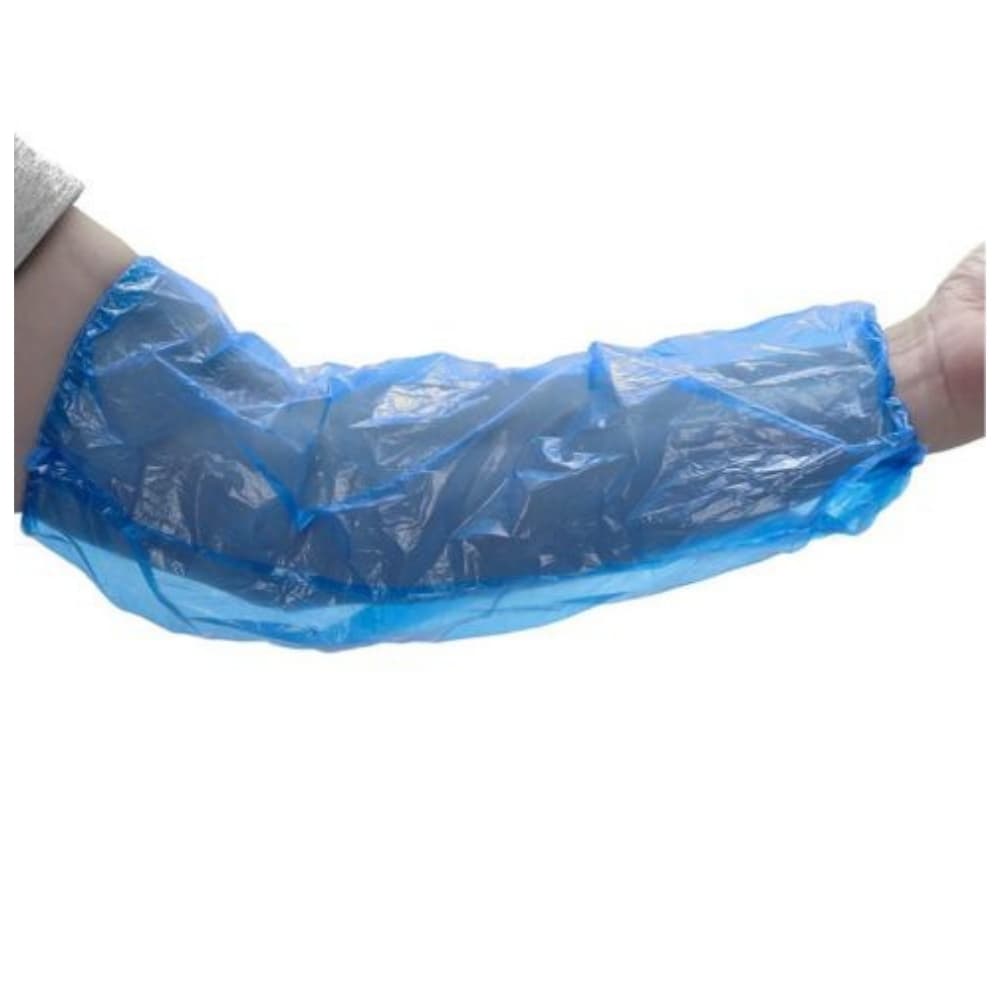
PE is a plastic film. It is waterproof, which makes it the right material wherever liquid is the hazard: butchery, evisceration, washdown, fish and seafood handling. It is also inexpensive and light, so it can be changed often. Its weakness is that it does not breathe, so during long wear heat and sweat build up under it. Examples include PE shoe covers, which are made in 9 micron as standard and 18 micron as an option, and PE sleeve covers for wet stations.
What non-woven does well
Non-woven spunbond is a fabric made from bonded polypropylene fibres. It breathes, feels softer against the skin and holds up across a full shift. It is not waterproof, so it is not the right choice where garments will be soaked. It is well suited to packing, assembly, dry handling and visitor access. Non-woven shoe covers and non-woven sleeve covers are typical examples.
How to choose by task
- Wet, splash-heavy tasks — PE aprons, long aprons, sleeve covers and shoe or boot covers
- Dry handling, packing and assembly — non-woven sleeve covers, shoe covers and gowns
- Long shifts where comfort decides compliance — non-woven wherever the hazard allows
- Short visitor access — either; non-woven is usually more comfortable, PE is usually cheaper
A common mistake
The instinctive way to specify PPE is to ask which option is tougher, and the answer is always plastic. That leads to PE everywhere, including zones where nothing is wet and operators wear it for hours. They get hot, they take it off, and compliance drops. Asking what the hazard actually is — liquid or fibres — usually shows that a large part of a plant is a non-woven job. For a worked example of this logic for sleeves see our guide to non-woven arm sleeves, and for aprons see food processing aprons.
Sourcing both materials
Because most plants need both materials, it helps to source them from one supplier with consistent specifications. Disponord manufactures and exports single-use hygiene consumables in both PE and non-woven, suitable for HACCP-controlled environments, and supplies food processors in bulk. Send us your zones and tasks through the quote form and we will propose a combined kit.
Browse all products & specs guides →
Frequently asked questions
- What is the difference between PE and non-woven PPE?
- PE is a waterproof plastic film that does not breathe. Non-woven is a breathable fabric that is not waterproof. PE suits wet tasks; non-woven suits dry handling, packing and long wear.
- Is non-woven or PE better for food processing?
- Neither is better in general. The right choice depends on the zone: waterproof PE for wet areas, breathable non-woven for dry areas. Most food plants use both.
Related products
- Foot Protection
PE Shoe Covers
Waterproof PE disposable shoe covers for wet food processing zones — controls floor cross-contamination in meat, seafood and dairy areas. Bulk supply.
View product → - Foot Protection
Non-woven Shoe Covers
Breathable non-woven disposable shoe covers for dry food processing and packaging zones — bulk supply from a manufacturer and exporter.
View product → - Arm Protection
PE Sleeve Covers
Waterproof polyethylene sleeve covers with elastic cuffs — for food handling and wet processing zones in meat, seafood and dairy plants.
View product → - Arm Protection
Non-woven Sleeve Covers
Breathable non-woven sleeve covers with ultrasonic seams and elastic cuffs — for food handling, packaging and dry processing zones.
View product →

Need disposable PPE for your facility?
Send us your requirement and we'll get back to you with a quote.
Request a Quote