
Guides
Food Processing Aprons: Specifying Disposable PE by Zone
19 August 2026 · 4 min read · Disponord
Not every wet task needs the same apron. How to specify disposable PE aprons for food processing by film thickness, length and zone — and where a long apron earns its cost.
Key takeaways
- Film thickness decides durability: light PE suits bench work, heavier film survives butchery and washdown.
- Length is a zone decision — knee-length for standing bench work, ankle-length where splash reaches the shins.
- Cost per apron matters less than change rate; an apron nobody replaces when soiled is not a barrier.
Search for food processing aprons and you will mostly be shown a single product with a colour and a price, as though every wet task in a plant were the same task. It is not. An operator portioning cheese at a bench, a butcher breaking carcasses and a cleaner hosing a line down at midnight all need an apron, and specifying one type for the whole site means either paying for coverage nobody uses or issuing a barrier that fails halfway through the shift. This guide covers the material choice, what film thickness actually changes, how far the apron needs to reach, and how to match disposable PE aprons to the zones you run.
What an apron in a food plant has to do
An apron works in two directions at once: it keeps blood, brine, juice and fat off the operator's clothing, and it keeps whatever is on that clothing away from open product. Both matter, and the second is the one auditors ask about. The load is heavier than most people assume — a wet line soaks an apron front within an hour — and this is where absorbent materials fail. A cloth apron takes liquid up rather than turning it away, and once saturated it stops being a barrier and becomes a contamination route that stays in service until somebody decides to change it. A single-use apron removes that decision: it is cheap enough to replace the moment it is soiled rather than at the end of the shift.
PE, non-woven or reusable
Three materials come up in practice. Polyethylene film is fully liquid-resistant and is the default for anything wet — it repels rather than absorbs, and it is inexpensive enough to treat as a per-shift consumable. Non-woven spunbond breathes and is more comfortable over long periods, but it absorbs, which makes it sensible for dry handling and packing and wrong anywhere with standing liquid. Reusable coated aprons last, but they carry a laundry and inspection burden: someone has to confirm each one is clean and undamaged before it goes back onto a line, and the cost of getting that wrong is a contaminated barrier in daily use. Most food plants settle on PE for wet zones and keep reusables for maintenance work away from open product.
Film thickness: what 20 and 50 micron change
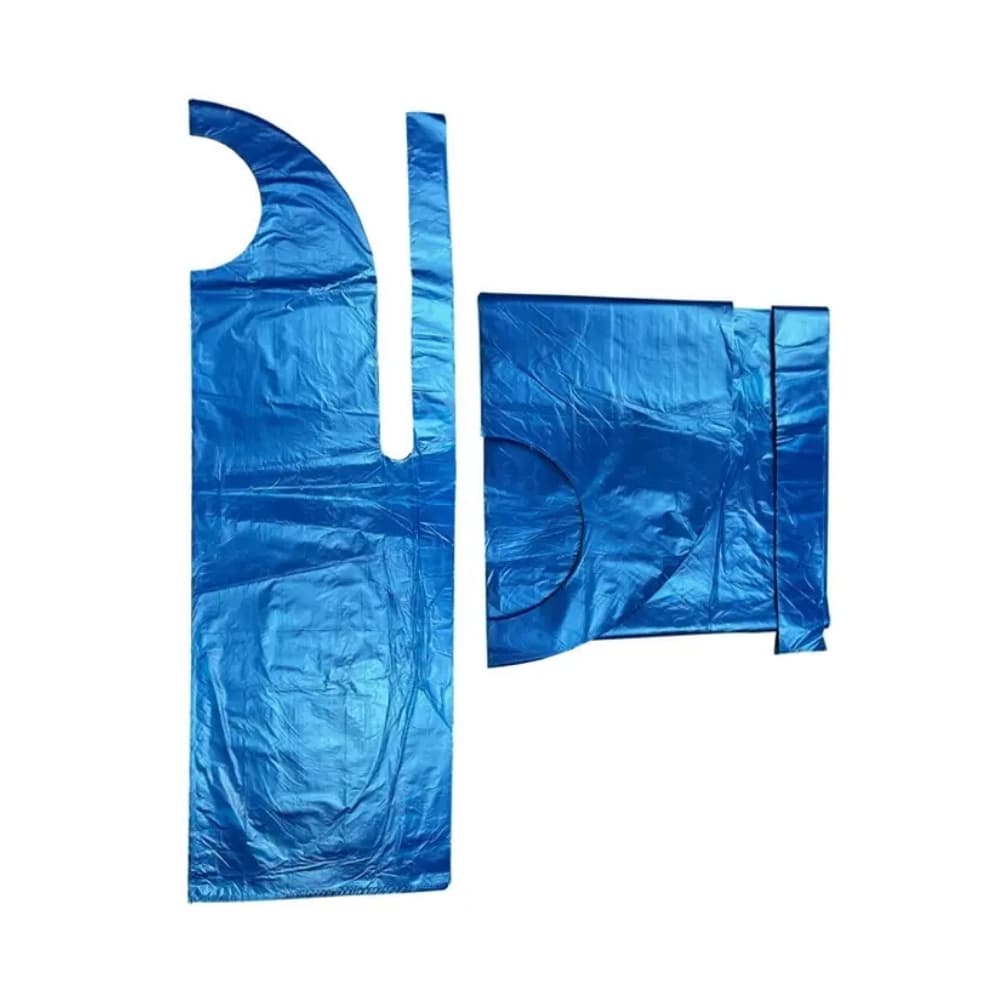
PE aprons are specified in microns, and the number is not a detail — it decides whether the apron survives the task. Our standard bib apron is 20 micron film: light, quiet and comfortable for a full shift, and a complete barrier against liquid. What it is not is a barrier against snagging, so it belongs on bench and line work rather than around hooks, crates and carcasses. Our long apron is 50 micron, heavy enough to take contact with equipment and product without splitting. The expensive mistake is buying thin film for heavy work. An apron that tears at the start of a shift protects nothing, and any saving disappears the moment operators start wearing two at a time to compensate.
Knee-length, ankle-length or sleeved
Coverage is decided by where the liquid lands, not by preference. A knee-length bib apron covers the torso and upper legs, which is right for standing work at a bench or packing table where a longer apron would catch on equipment and get in the way. An ankle-length long apron is for the work that soaks you to the shins — fish and seafood cleaning, slaughter and cutting lines, heavy washdown. The third case is the forearm: where the arm goes into the product, a tank or a cavity, a bib apron leaves the sleeve exposed, and pairing it with PE sleeve covers closes that gap more cheaply and more comfortably than a full sleeved garment.
Matching aprons to zones
The practical approach is to assign a specification to each zone rather than issuing one apron across the site:
- Packing, inspection and dry handling: a light PE bib apron, or none at all where no liquid is present.
- Bench butchery, portioning and dairy filling: 20 micron PE bib apron, changed as soon as it is soiled.
- Slaughter, evisceration and large-carcass work: 50 micron ankle-length apron that will not tear on contact.
- Fish and seafood cleaning: ankle-length apron with sleeve covers — splash reaches both shins and forearms.
- Washdown and deep-clean: full-length heavier film, worn with boot covers rather than shoe covers.
Consumption, packaging and reorder points
Aprons are the highest-turnover garment on a wet line, and consumption is driven by change rate rather than headcount. One per operator per shift is the floor; on a heavy line it is two or three, because the whole point of a disposable apron is that it is replaced when soiled. Packaging shapes that behaviour more than buyers expect — bib aprons supplied 100 to a pack suit a gowning station where operators collect one on entry, while long aprons supplied 50 to a roll suit a dispenser mounted next to the line, where a mid-shift change has to take seconds. Work out volume from headcount multiplied by shifts and change rate, then set a reorder point that survives a peak week. If you are specifying aprons across several zones and want the thickness and length matched to each, we can help you map it and set up bulk resupply.
Frequently asked questions
- What kind of apron is used in food processing?
- Most food plants use disposable polyethylene (PE) aprons for wet tasks and keep breathable non-woven aprons for dry handling. PE is liquid-resistant, so it repels blood, brine and washdown water instead of absorbing them, and it is inexpensive enough to change as soon as it is soiled.
- What is the difference between a 20 micron and a 50 micron PE apron?
- Micron is the thickness of the polyethylene film. A 20 micron apron is light and comfortable for bench and line work; a 50 micron apron is heavier and resists tearing where it meets carcasses, hooks and equipment. Both are fully waterproof — the difference is durability, not liquid resistance.
- Which apron suits fish and seafood processing?
- Fish and seafood work is among the wettest in food processing, and splash regularly reaches below the knee, so an ankle-length PE long apron is the sensible specification. Worn with PE sleeve covers and boot covers it keeps the whole front of the body covered through cleaning and filleting.
Related products
- Arm Protection
PE Sleeve Covers
Waterproof polyethylene sleeve covers with elastic cuffs — for food handling and wet processing zones in meat, seafood and dairy plants.
View product → - Body Protection
Disposable PE Aprons
Lightweight waterproof polyethylene aprons for food handling and wet processing — knee-length coverage for meat, dairy and packaging zones.
View product → - Body Protection
Disposable PE Long Aprons
Ankle-length waterproof polyethylene aprons for maximum coverage in seafood, fish and heavy wet food-processing environments.
View product →


Need disposable PPE for your facility?
Send us your requirement and we'll get back to you with a quote.
Request a Quote