
Industry guides
Disposable PPE for Edible Oil, Sauce and Condiment Plants: A Zone Guide
17 October 2026 · 4 min read · Disponord
Greasy floors, hot mixing and fast filling lines: which disposable PPE to issue in each zone of an edible oil, sauce, dressing or condiment plant, and how to choose between aprons and coveralls.
Key takeaways
- Oil and sauce plants are defined by liquids and grease: waterproof PE aprons, sleeve covers and boot covers matter more here than in dry-product plants.
- Issue PPE by zone: mixing and cooking, filling, and packing each have different splash and contact risks.
- Choose a PE apron for splash and a coverall for full-body cover; many plants use an apron over a coverall at the messiest stations.
- Slippery floors are a safety issue as well as a hygiene one, so boot covers must be matched to the floor and the task.
A plant that fills bottles with oil, dressing or sauce has a different PPE problem from a bakery or a packing hall. Everything is liquid, warm and often greasy. Splashes land on sleeves and chests, spills travel across the floor on boots, and a garment that is fine in a dry zone can be soaked within minutes. This guide sets out which disposable hygiene PPE suits each zone of an edible oil, sauce, dressing or condiment plant, so you can issue the right item and keep the specification simple.
What makes these plants different
- Liquids and fat: waterproof barriers matter, and non-woven garments can absorb oil unless they are laminated.
- Heat and steam: cooking and pasteurising areas are warm, so heavy garments are uncomfortable and tend to be taken off.
- Slippery floors: spilled oil makes boots and shoe covers a safety question as well as a hygiene one.
- Open product at filling: hair, fibre and sleeve contact are the main contamination routes.
- Frequent changes of product: sauces with allergens such as mustard, egg or sesame call for clean PPE at changeover.
Zone-by-zone PPE guide
| Zone | Main risk | Disposable PPE to consider | Note |
|---|---|---|---|
| Ingredient intake and tank farm | Spills, drips, wet floors | PE apron, hair net, boot covers | Check boots are suited to oily floors |
| Mixing and cooking | Splash, steam, hot product | PE apron, PE sleeve covers, hair net, beard cover | Keep garments light for heat |
| Filling and capping | Open product, drips, hair | Hair net, beard cover, sleeve covers, light apron | Clean PPE at every line start |
| Packing and labelling | Cartons, low splash | Hair net, non-woven sleeve covers, apron if needed | Breathable items suit long shifts |
| Cleaning and washdown | Water, detergent, grease | Heavy PE apron, long sleeve covers, boot covers | Discard after each shift |
| Visitors and contractors | Entering a wet, slippery area | Visitor gown or coverall, hair net, shoe or boot covers | Brief them on slippery floors |
Aprons or coveralls?
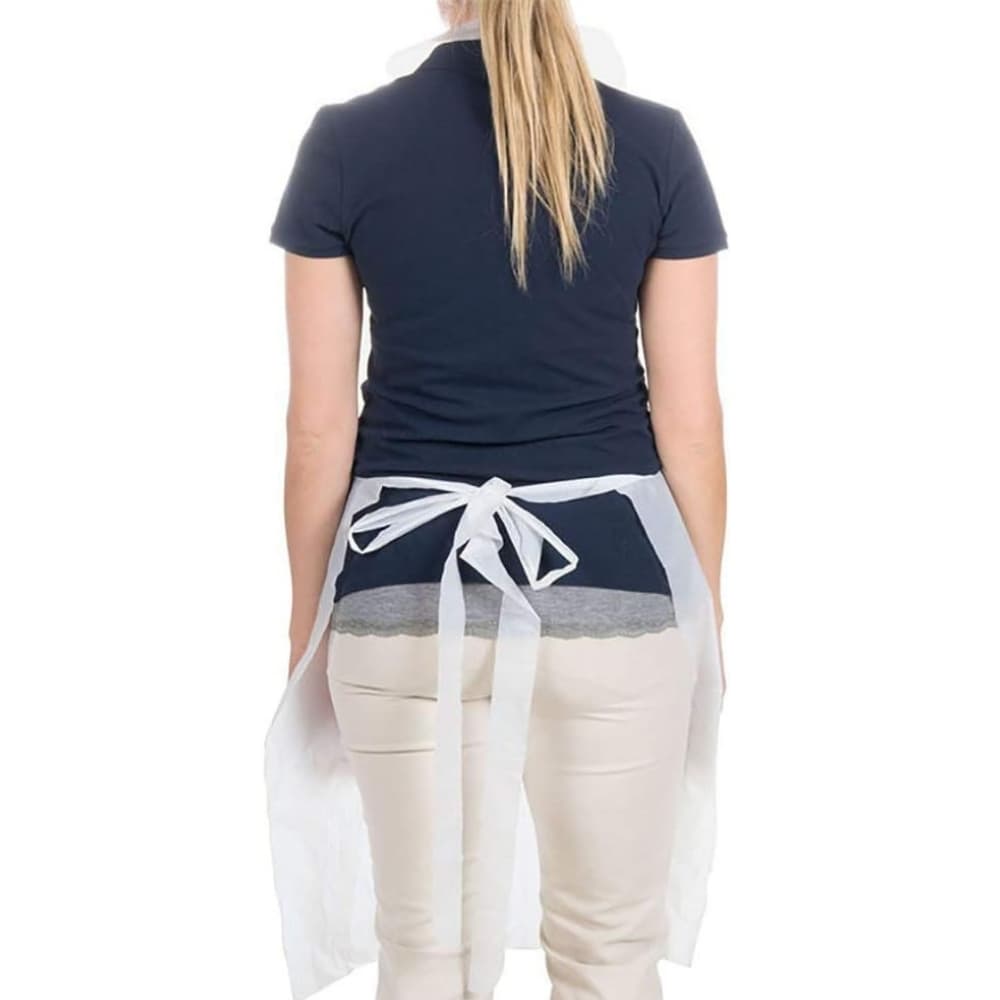
A PE apron is the usual answer for splash. It is waterproof, light and quick to change, and it protects the front of the body where most of the contact happens. A disposable coverall gives full-body cover and suits maintenance staff and visitors, but a standard non-woven coverall can soak up oil, so check whether the fabric is laminated or coated before you rely on it near liquids.
- Use a PE apron for operators at mixing, filling and washdown stations.
- Use a coverall for maintenance staff, contractors and people moving between zones.
- At the messiest stations, wear an apron over a coverall and change the apron when it is soiled.
Sleeve covers, boot covers and head covers
Sleeves reach into product more often than any other part of the body, which is why PE sleeve covers are common at mixing tanks and filling heads. In dry packing areas, breathable non-woven sleeve covers are more comfortable. Boot covers are the choice for wet floors because they rise above the ankle and keep liquid off the shoe, while lighter shoe covers suit drier areas. Hair nets and beard covers are needed wherever product is open, and the standard is the same as in any other food plant.
Handling visitors and contractors
Visitors are often taken to the filling hall because it is the most visible part of the plant. Issue them PPE at a defined entry point, include boot or shoe covers suited to the floor, and warn them about slippery surfaces. Contractors working on tanks, pipes or pumps are more likely to meet oil and need a heavier barrier than a visitor does. Record what you issue so the plant can show how access is controlled.
Practical points for ordering
- List each zone and the item issued there, using the table above as a starting point.
- Test samples at a real station, including during a washdown, before you order a full quantity.
- Specify PE thickness for aprons and sleeve covers, and ask whether non-woven items are laminated.
- Plan stock for peaks, because filling runs and cleaning days use more PPE than a quiet shift.
- Check your own audit scheme and local rules for any additional requirements.
Disponord manufactures and exports disposable hygiene PPE for food plants. Request a quote on the website with your zones and monthly volumes; delivery is typically 7 to 21 days in total, production and shipping combined.
Frequently asked questions
- What PPE is needed in a sauce or condiment plant?
- Most plants issue hair nets, beard covers where relevant, PE aprons, sleeve covers and boot or shoe covers, with a coverall for maintenance staff and visitors. The exact mix depends on the zone and on your own hygiene policy.
- Are non-woven garments suitable near oil?
- Standard non-woven fabric can absorb oil and liquid. Near liquids, a PE apron or a laminated garment is the safer choice, and non-woven items fit best in drier packing areas.
- Should staff wear boot covers or shoe covers on oily floors?
- Boot covers keep liquid off the shoe and are usually the better choice for wet areas. On any slippery floor, test the item for grip first, because a cover that slips is a safety risk.
- How often should aprons and sleeve covers be changed?
- Change them whenever they are soiled, torn or after leaving the zone, and at the end of each shift as a minimum. Disposable items are designed for single use.
- Do visitors need full PPE in the filling hall?
- Visitors should wear at least a hair net, a gown or coverall and shoe or boot covers where product is open. Check your audit scheme and local rules for what applies to your plant.
Related products
- Head Protection
Disposable Hair Nets
Non-woven bouffant caps with double elastic band for food processing — breathable, controls hair contamination in production and packaging zones.
View product → - Foot Protection
Disposable Boot Covers
Waterproof polyethylene boot covers (anti-slip sole option) for slaughterhouses and wet food plants — full lower-leg coverage, bulk packaging for facility use.
View product → - Arm Protection
PE Sleeve Covers
Waterproof polyethylene sleeve covers with elastic cuffs — for food handling and wet processing zones in meat, seafood and dairy plants.
View product → - Body Protection
Disposable PE Aprons
Lightweight waterproof polyethylene aprons for food handling and wet processing — knee-length coverage for meat, dairy and packaging zones.
View product →
Need disposable PPE for your facility?
Send us your requirement and we'll get back to you with a quote.
Request a Quote