
Industry guides
Disposable PPE for Date Packing and Processing Plants: A Zone Guide
14 November 2026 · 3 min read · Disponord
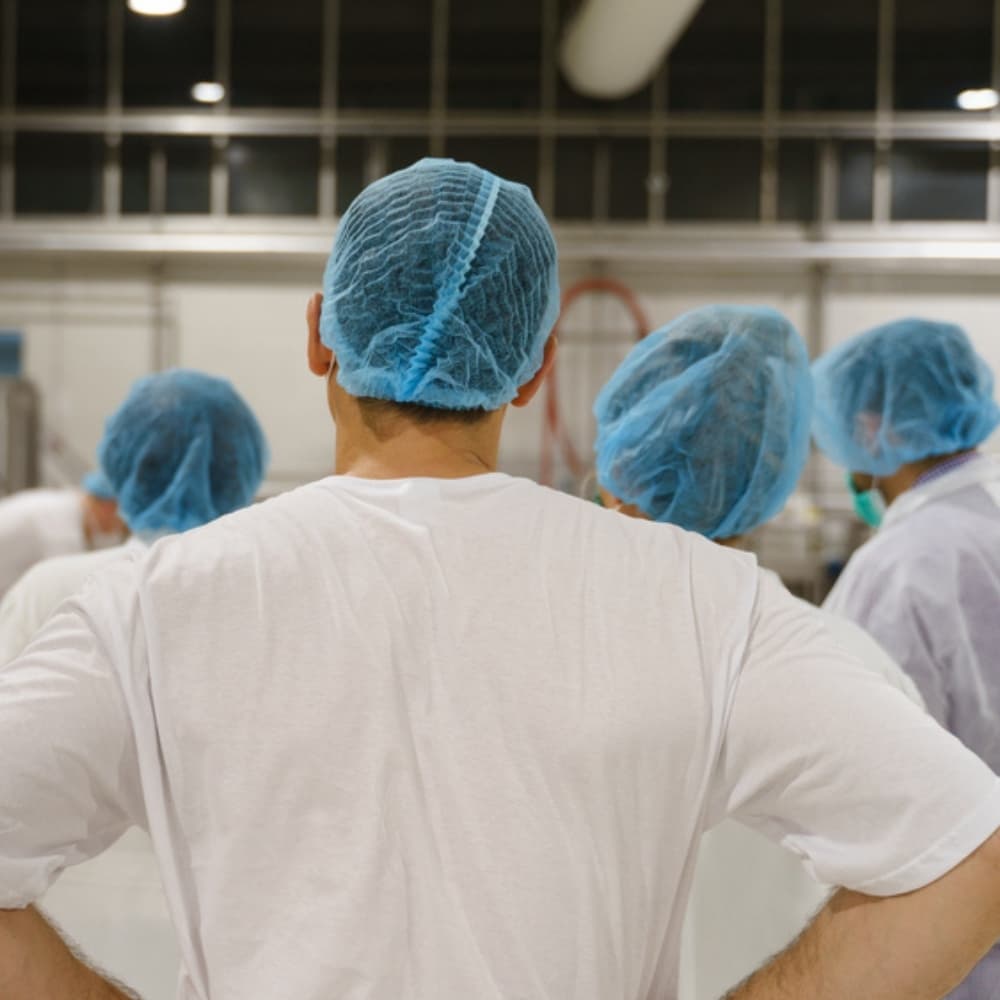
Sticky fruit, dust from the orchard and a short, intense season: which disposable hygiene PPE to issue in each zone of a date sorting, washing, pitting and packing plant.
Key takeaways
- Date plants handle a sticky, hand-sorted product, so hair, beard and sleeve cover matter more than heavy splash protection in most zones.
- Dusty intake and clean packing must be separated by a PPE change, with separate stock and a different colour on each side.
- Seasonal and agency staff multiply consumption during the harvest, so volume has to be planned and ordered before the season starts.
A date plant looks simple from the outside: fruit comes in, gets sorted and leaves in cartons. On the floor it is harder. The fruit arrives with field dust, sand and insects, most of the sorting is done by hand, and the product is sticky enough to hold on to any hair or fibre that touches it. Most of the year's volume also passes through in a few months, with a workforce that is partly seasonal. This guide sets out which disposable hygiene PPE suits each zone of a date sorting, washing, pitting and packing plant, including paste and syrup lines. Gloves are out of scope here.
What makes date plants different
- Hand sorting: many people work directly over open fruit for long shifts, so hair nets and beard covers are the core items.
- Sticky product: sugar and syrup transfer from hands and forearms to everything, so sleeves need cover and aprons need frequent changes.
- Field contamination: dust, sand and pests arrive with the crates, so intake must be kept apart from clean zones.
- Heat: plants in Iraq, the Gulf and North Africa are hot, and heavy garments get pulled off or worn badly.
- Seasonality: headcount can multiply during the harvest, with many new staff who need a simple, visible rule.
Zone-by-zone PPE guide
Use the table as a starting point and adjust it to your own layout, product range and audit scheme.
| Zone | Main risk | Disposable PPE to consider | Note |
|---|---|---|---|
| Intake and fumigation area | Dust, sand, pests, outside traffic | Hair net, shoe covers, apron | Keep this stock away from clean zones |
| Sorting and grading | Hair, fibre, hand and forearm contact | Hair net, beard cover, non-woven sleeve covers, light apron | Breathable items for long shifts |
| Washing and drying | Water, wet floors | PE apron, PE sleeve covers, boot covers | Change before entering dry zones |
| Pitting and stuffing | Open fruit, direct handling, nuts as allergens | Hair net, beard cover, sleeve covers, apron, face mask where required | Clean PPE at changeover between fillings |
| Paste and syrup lines | Sticky splash, warm product | PE apron, PE sleeve covers, hair net, beard cover | Replace aprons as soon as they are soiled |
| Packing and cartoning | Hair and fibre in finished packs | Hair net, beard cover, non-woven sleeve covers | Cleanest zone; no garments from intake |
| Visitors and contractors | Unfamiliar with the rules | Visitor gown, hair net, shoe covers | Issue at the entrance, collect at the exit |
Choosing between non-woven and PE items
In dry zones such as sorting and packing, non-woven items are the usual choice because they breathe and stay comfortable in the heat. Non-woven sleeve covers keep forearm hair and skin away from the fruit without making staff sweat. In wet and sticky zones such as washing, paste and syrup, a disposable PE apron and PE sleeve covers are easier to keep clean, because sugar and water do not soak in. For the general logic, see PE vs Non-woven Disposable PPE.
Managing seasonal staff
- Give each zone one colour, so a supervisor can spot a wrong garment from a distance. See Colour-Coding Disposable PPE by Zone.
- Put dispensers and bins at every zone entrance, not only at the main door.
- Train new staff on the order of putting items on and taking them off on their first day.
- Keep a separate visitor and contractor stock, so tours and repairs do not drain production supplies.
Planning volume before the harvest
Estimate consumption per zone and per shift from your own headcount, then multiply by the number of changes per person. Add seasonal staff, visitors and a safety margin, and convert the total to cartons. Because the season is short, the order should arrive before it starts: a late delivery cannot be made up afterwards. The method is set out step by step in How to Calculate Monthly Disposable PPE Consumption.
Disponord manufactures and exports disposable hygiene PPE for food plants. Send your zones and seasonal volumes through the quote form; delivery is typically 7 to 21 days in total, production and shipping combined.
Frequently asked questions
- What PPE do workers need in a date packing plant?
- The core set is a hair net, a beard cover for staff with facial hair, and sleeve covers for anyone handling open fruit. Wet and sticky zones such as washing, paste and syrup lines add a waterproof PE apron, PE sleeve covers and boot covers. Check your own audit scheme and local rules.
- Should date sorters wear sleeve covers?
- Yes, where forearms pass over open fruit. Sleeve covers keep arm hair, skin and clothing fibre away from a sticky product that holds on to contamination. Non-woven sleeve covers are the usual choice in dry sorting and packing zones because they breathe.
- How do we plan disposable PPE for the date season?
- Start from peak headcount per zone and shift, multiply by the number of changes per item, add seasonal staff and visitors, then add a safety margin. Place the order early enough for the goods to arrive before the harvest begins.
Related products
- Head Protection
Disposable Hair Nets
Non-woven bouffant caps with double elastic band for food processing — breathable, controls hair contamination in production and packaging zones.
View product → - Face Protection
Disposable Beard Covers
Single-use non-woven beard covers with a single elastic loop — for food processing, meat plants and food service kitchens.
View product → - Arm Protection
Non-woven Sleeve Covers
Breathable non-woven sleeve covers with ultrasonic seams and elastic cuffs — for food handling, packaging and dry processing zones.
View product → - Body Protection
Disposable PE Aprons
Lightweight waterproof polyethylene aprons for food handling and wet processing — knee-length coverage for meat, dairy and packaging zones.
View product →



Need disposable PPE for your facility?
Send us your requirement and we'll get back to you with a quote.
Request a Quote