
Buying & operations
Disposable vs Laundered Reusable PPE in Food Plants
9 October 2026 · 2 min read · Disponord
Single-use or laundered reusable garments? A balanced look at hygiene control, real cost per use, waste and where each option makes sense in a food plant.
Key takeaways
- Disposable PPE removes the laundering step, so there is no cleaning process that can fail or need validating.
- Reusable garments can win on cost for heavy, long-use items, but only if laundering, replacement and lost stock are counted honestly.
- Many plants end up with a hybrid: reusable for core uniforms, disposable for visitors, wet tasks and high-risk zones.
Plants regularly ask whether they should issue single-use PPE or laundered reusable garments. There is no universal answer, and anyone who offers one is selling something. The right choice depends on the task, the zone, the audit evidence you need and what you count in the cost. This guide sets out the trade-offs plainly, including where reusable items are the better option.
Hygiene control
The central difference is the cleaning step. A reusable garment is only as clean as the laundering process that returns it, so the plant relies on the laundry contractor, on inspection and on records. If the process fails, the garment carries contamination into the production area. A single-use item has no such step: it is issued clean, used once and discarded, which makes it simple to control and easy to show an auditor. That is the main reason disposable items dominate in visitors, contractors and higher-risk zones. See How Single-Use Hygiene Supports a HACCP-Controlled Environment.
What the real cost per use includes
Disposable cost is easy to see: a price per piece. Reusable cost is spread across more lines, and comparisons that look only at the garment price per use can mislead. A fair comparison counts all of the following:
- Purchase or rental of the garment and the number of wears before it must be replaced.
- Laundering charges, transport and the plant's own handling time.
- Replacement of lost, damaged or stained garments, and the stock held to cover items in the wash.
- Storage and issue systems, such as lockers, tracking and sizing.
- For disposable: purchase price, waste disposal and storage of cartons.
Waste and sustainability
Disposable PPE creates waste, and that is a fair objection. Reusable garments create laundry water, energy and detergent demand instead. Which is lower impact depends on the garment, the wash process and the number of wears, and honest numbers are hard to find. Many plants decide this on hygiene and practicality first and reduce waste by specifying the lightest item that does the job, rather than the heaviest.
Where each option makes sense
| Situation | Usually better suited to |
|---|---|
| Visitors, auditors, contractors | Disposable |
| Wet tasks, washdown, short high-contamination jobs | Disposable PE |
| High-risk or ready-to-eat zones | Disposable, for simple control |
| Heavy, long-wear uniforms for permanent staff | Reusable, if laundering is controlled |
| Cut-resistant or heavy-duty items | Reusable |
A hybrid approach
Most plants end up with a mix: laundered uniforms for permanent staff, and single-use garments, hair nets, beard covers, sleeve covers, aprons and shoe covers for visitors, wet work and controlled zones. That keeps the cost of everyday wear down while keeping the highest-risk interfaces simple. The right split is the one your own risk assessment and audit evidence support.
What Disponord supplies
Disponord manufactures and exports disposable hair nets, beard covers, aprons, sleeve covers, shoe and boot covers, visitor gowns and coveralls. If you are comparing a disposable range against your current setup, send your item list and volumes through the quote form so you can compare real prices.
Browse all buying & operations guides →
Frequently asked questions
- Is disposable PPE more hygienic than reusable?
- It is simpler to control, because there is no laundering step to validate. A well-run laundering process can also be acceptable, so the decision depends on the task, zone and audit evidence.
- Is disposable PPE cheaper than reusable?
- It depends on what is counted. Reusable garments can be cheaper per use for heavy items once laundering, replacement and lost stock are included fairly, and disposable is often cheaper for visitors and short tasks.
- Can a plant use both disposable and reusable PPE?
- Yes, and many do. A common split is reusable uniforms for permanent staff and single-use items for visitors, wet work and controlled zones.
Related products
- Head Protection
Disposable Hair Nets
Non-woven bouffant caps with double elastic band for food processing — breathable, controls hair contamination in production and packaging zones.
View product → - Body Protection
Disposable Visitor Gowns
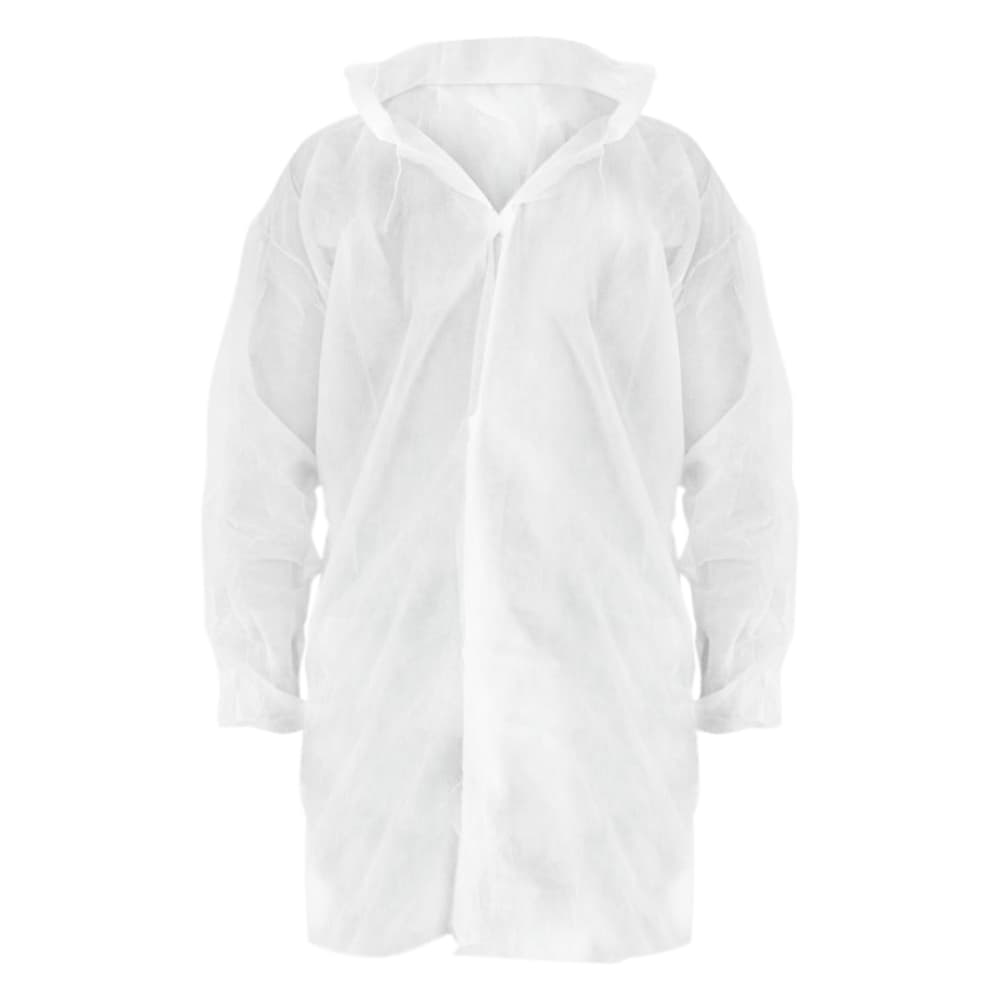
Non-woven visitor gowns with velcro front and elastic cuffs for food processing plants — also used as a lab-coat-style disposable coat for staff and QA areas.
View product → - Body Protection
Disposable PE Aprons
Lightweight waterproof polyethylene aprons for food handling and wet processing — knee-length coverage for meat, dairy and packaging zones.
View product → - Body Protection
Disposable Coveralls
Non-woven coveralls with front zipper closure — full-body contamination barrier for food processing, packaging and production zones.
View product →


Need disposable PPE for your facility?
Send us your requirement and we'll get back to you with a quote.
Request a Quote