
Compliance & hygiene
Contractor PPE in Food Factories: Maintenance Staff and Temporary Workers
17 October 2026 · 4 min read · Disponord
Induction, what to issue, tool and jewellery control, zone access, records and shutdown stock: a practical routine for contractors, maintenance engineers and temporary staff.
Key takeaways
- Treat contractors, maintenance engineers and temporary staff as a distinct group with their own written routine: induction, issue, zone access and records.
- Issue disposable coveralls, hair and beard covers, sleeve covers and boot covers by role and zone, not by habit.
- Control tools and jewellery at the gate with a simple count-in, count-out sheet.
- For shutdown weeks, multiply headcount by changes per day by days, add a margin and order early.
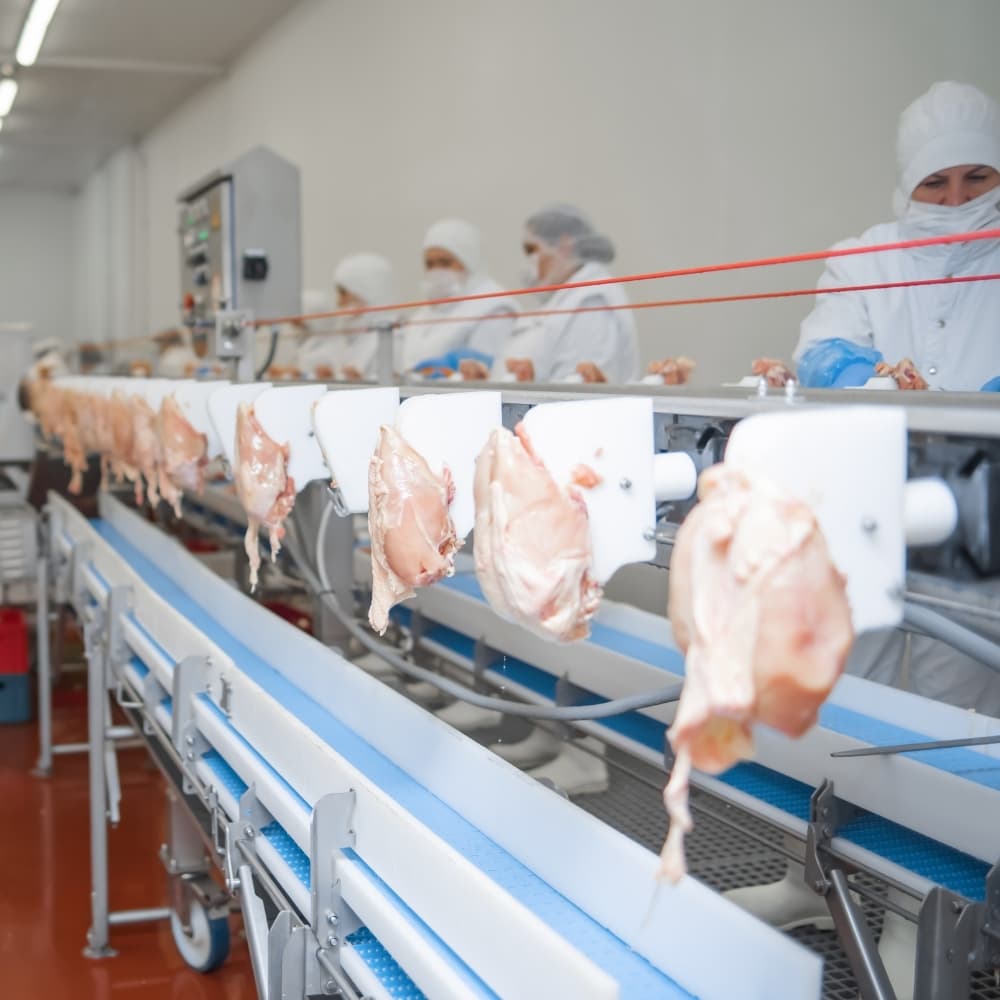
Contractors, maintenance engineers and temporary staff move between zones, carry tools and do not work in your plant every day. That makes them one of the most common sources of hygiene gaps and one of the first things an auditor asks about. This guide sets out a practical routine for contractor PPE in a food factory: induction, what to issue, how to control tools and jewellery, how to manage zone access, what records to keep and how to plan stock for shutdown weeks.
Why outside people need their own routine
Permanent operators learn the rules through daily repetition. A contractor arriving for a two-day repair has not had that time, and may come straight from another site or a workshop. Maintenance engineers are a special case: they open equipment, work close to exposed product and often carry tools between dirty and clean areas. Temporary staff work the line like employees but may join at short notice. A written routine, applied the same way every time, protects product and spares your gatekeeper from negotiating at the door.
Induction before anything is issued
- Confirm who the person is, which company they work for and which areas they need to enter, and record it at the gate.
- Explain the hygiene rules in plain language, in the languages your visitors speak.
- Ask about illness, open cuts and skin conditions, following your own health policy.
- Show the changing sequence: hands, hair cover, beard cover, coverall, sleeve covers, boot covers, hands again.
- Agree what may be brought in, and where tools and personal items are stored or checked.
What to issue, by role
The right set depends on the zone and the task, so treat the table below as a starting point and adjust it to your own hygiene policy and audit scheme.
| Role | Typical zone | Items issued |
|---|---|---|
| Short-visit contractor (survey, delivery, quote) | Low-risk areas and corridors | Hair net, beard cover if needed, shoe covers or boot covers, visitor gown |
| Maintenance engineer | Production hall, near open product | Hair net, beard cover if needed, disposable coverall, boot covers, sleeve covers if the arms are exposed |
| Temporary line operator | Production line or packing | Hair net, beard cover if needed, coverall or gown per site rule, sleeve covers, shoe covers, apron in wet areas |
| Shutdown-week contractor crew | Production hall and plant rooms | Hair net, beard cover if needed, disposable coverall, boot covers, sleeve covers |
| Cleaning or sanitation contractor | Wet zones | Hair net, PE apron, boot covers, sleeve covers, coverall |
Disposable coveralls for contractors keep the issue simple: one clean garment per entry, no laundering and no mix-up with staff garments. Use non-woven for dry areas and PE for wet work, where an apron or sleeve cover has to resist splashes. For tasks such as welding or grinding, check what protection the job needs beyond hygiene, because disposable hygiene garments are not a substitute for safety PPE.
Tools, jewellery and personal items
- Remove watches, rings, bracelets, earrings and other jewellery before entry, in line with your own site rules.
- Keep phones, pens and loose papers in a locker or bag outside the zone.
- Count tools in and out on a simple sheet, so nothing is left inside equipment.
- Clean tools before they enter, and keep a dedicated clean toolbox for production areas.
- Check for loose items such as screws, tape and blade fragments before leaving the zone.
Zone access
Match the kit to the zone, not to the person. A maintenance engineer who moves from a low-risk corridor into a high-care room should change fully at the boundary. Use colour coding, for example one hair net colour for contractors, so staff can see at a glance who is where and who should not be in a given zone. Provide a changing point or dispenser at each boundary, so that nobody carries used PPE into a cleaner area.
Records that satisfy an audit
Auditors want to see that the rule is applied, not only written down. Keep a simple log that takes under a minute to complete:
- Name, company, date, and time in and out.
- Areas entered and purpose of the visit.
- Induction completed, and by whom.
- Items issued, and tools counted in and out.
- Health declaration, where your policy requires one.
Keep the log with your other hygiene records. Check your own audit scheme and local rules for how long to retain it.
Planning stock for shutdown weeks
A shutdown can multiply the number of people entering your plant. Ask the maintenance manager for the headcount per day and for how often people will change in and out, including breaks. Multiply headcount by changes per day by the number of days, add a safety margin, and order early enough to allow for production and shipping. Coveralls and boot covers run out first, because each person may use several sets per day. Keep larger sizes in reserve, since contractors arrive in unpredictable sizes.
Disponord manufactures and exports disposable hygiene PPE for food plants. Request a quote on our website with your expected headcount and sizes; delivery is typically 7 to 21 days in total, production and shipping combined.
Browse all compliance & hygiene guides →
Frequently asked questions
- Should contractors wear the same PPE as employees?
- Contractors should meet the same hygiene standard as employees for the zone they enter. Many plants issue disposable PPE to contractors, so their kit is clearly distinct and there is no laundering to manage.
- What should contractors wear in a food factory?
- At minimum a hair cover, a beard cover where applicable, a coverall or gown, and shoe or boot covers. Add sleeve covers or an apron according to the task and zone, and follow your own hygiene policy.
- How many disposable coveralls do we need for a shutdown week?
- Multiply the daily headcount by the number of changes per person per day and by the number of days, then add a margin. Confirm headcount with the maintenance manager early, and order with production and shipping time in mind.
- Can contractors bring their own tools into production areas?
- Yes, if the tools are clean, listed on a tool sheet and counted out again at exit. Many plants supply a dedicated clean toolbox for production areas.
- What records should we keep for contractors?
- Keep name, company, times in and out, areas entered, induction, items issued and tools counted. Check your own audit scheme and local rules for how long to retain the records.
Related products
- Head Protection
Disposable Hair Nets
Non-woven bouffant caps with double elastic band for food processing — breathable, controls hair contamination in production and packaging zones.
View product → - Foot Protection
Disposable Boot Covers
Waterproof polyethylene boot covers (anti-slip sole option) for slaughterhouses and wet food plants — full lower-leg coverage, bulk packaging for facility use.
View product → - Arm Protection
Non-woven Sleeve Covers
Breathable non-woven sleeve covers with ultrasonic seams and elastic cuffs — for food handling, packaging and dry processing zones.
View product → - Body Protection
Disposable Coveralls
Non-woven coveralls with front zipper closure — full-body contamination barrier for food processing, packaging and production zones.
View product →
Need disposable PPE for your facility?
Send us your requirement and we'll get back to you with a quote.
Request a Quote