
Industry guides
Disposable PPE for Flour Mills, Pasta and Dry Goods Plants
14 November 2026 · 3 min read · Disponord
Dust instead of splash: which disposable hygiene PPE suits flour mills, pasta plants and rice, pulse and grain packing lines, and where non-woven items beat plastic ones.
Key takeaways
- Dry goods plants are dusty rather than wet, so breathable non-woven items suit most zones better than waterproof PE.
- Hair, beard and fibre are the main foreign-body risks at open product points such as sifting, extrusion and filling.
- Maintenance and cleaning crews move between dirty and clean areas and need their own coverall and shoe cover stock.
Flour mills, pasta plants and packing lines for rice, pulses and grains share one feature: the product is dry and the air is dusty. There is little splash to protect against, but there is a constant foreign-body risk, because flour and grain are handled in bulk and a hair or fibre that falls in is unlikely to be found again. Large parts of the process are enclosed, so the PPE question is concentrated at a few open points and at the people who move between zones. This guide covers hair, beard, body, sleeve and footwear items for these plants. Respiratory protection against dust is a workplace safety matter with its own rules and is out of scope here.
Where the product is exposed
- Intake and cleaning of grain: dusty, with outside traffic from trucks and drivers.
- Sifting, blending and additive dosing: open product and manual handling of sacks and small ingredients.
- Pasta extrusion and cutting: warm, humid and open, before the dryer.
- Filling and bagging: open bags, hoppers and scales.
- Maintenance and cleaning: machines are opened and people enter areas that are normally closed.
Zone-by-zone PPE guide
| Zone | Main risk | Disposable PPE to consider | Note |
|---|---|---|---|
| Grain intake and silos | Dust, outside traffic | Hair net, shoe covers for drivers and visitors | Keep apart from milling and packing |
| Milling floor | Dust, enclosed product | Hair net, beard cover | Light items; the process is mostly closed |
| Sifting, blending, dosing | Open product, manual handling | Hair net, beard cover, non-woven sleeve covers | Clean PPE at allergen changeover |
| Pasta extrusion and cutting | Open warm product | Hair net, beard cover, sleeve covers, light apron | Humidity makes breathability important |
| Filling and bagging | Hair and fibre in finished packs | Hair net, beard cover, sleeve covers | Cleanest zone |
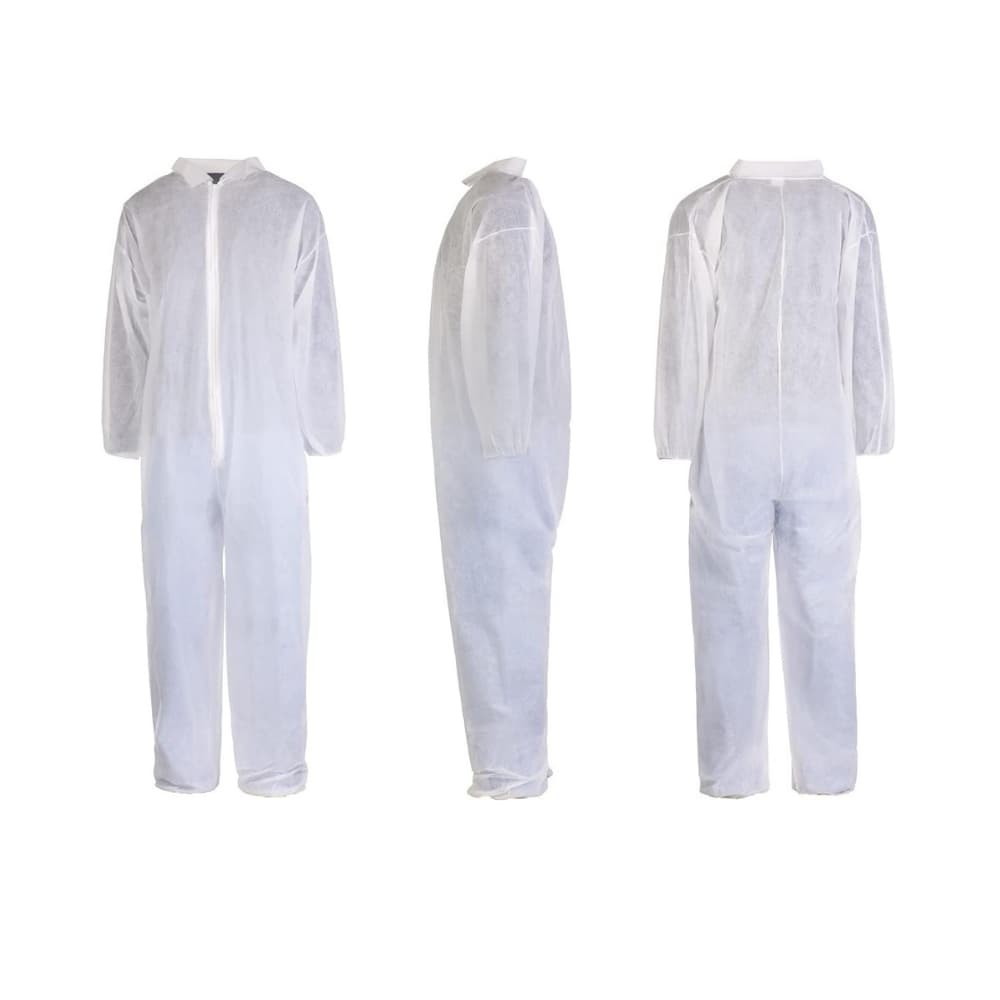
| Maintenance and cleaning | Cross-contamination between zones | Coverall, hair net, shoe covers | Separate stock, discarded after the job |
| Visitors and auditors | Unfamiliar with the rules | Visitor gown, hair net, shoe covers | Issue at the entrance |
Why non-woven suits dry plants
In a dry, warm plant the main requirement is that staff keep their PPE on for the whole shift. Non-woven items breathe, so hair nets, beard covers, non-woven sleeve covers and non-woven shoe covers are the usual choice. PE items are reserved for wet cleaning and for the few stations with water or oil. The comparison is covered in PE vs Non-woven Disposable PPE.
Maintenance crews, contractors and visitors
In an enclosed process, the highest-risk moment is when a machine is opened. Fitters and cleaning crews carry dust, grease and fibres from one area to the next. A disposable coverall put on at the zone entrance and discarded after the job is a simple control, and it is easy to show to an auditor. Keep a dedicated stock for maintenance, contractors and visitors, separate from production supplies. More detail is in Contractor and Maintenance PPE in Food Plants.
What to state in the order
- Hair and beard covers: size, colour and pieces per bag and per carton.
- Sleeve covers: material, length and colour.
- Coveralls: fabric weight in gsm, sizes and whether a hood is needed.
- Shoe covers: non-woven for dry floors; state the size.
- Monthly volume per item and the delivery destination, so freight can be priced.
Disponord manufactures and exports disposable hygiene PPE for food plants. Send your item list and monthly volumes through the quote form; delivery is typically 7 to 21 days in total, production and shipping combined.
Frequently asked questions
- What PPE is used in a flour mill?
- For food hygiene, the core items are a hair net and a beard cover for everyone on the milling and packing floors, plus sleeve covers at open product points. Maintenance staff and visitors usually get a coverall or visitor gown and shoe covers. Dust masks and other respiratory protection follow workplace safety rules and are a separate matter.
- Are non-woven or PE items better for dry food plants?
- Non-woven items are usually better in dry zones because they breathe and staff keep them on. PE items are waterproof and suit wet cleaning and stations with liquids, but they are warm to wear for a full shift.
- Do maintenance staff need different PPE from operators?
- Often yes. Maintenance staff move between zones and open machines, so many plants issue them a disposable coverall and shoe covers at each clean-zone entrance, on top of the hair and beard cover that everyone wears.
Related products
- Head Protection
Disposable Hair Nets
Non-woven bouffant caps with double elastic band for food processing — breathable, controls hair contamination in production and packaging zones.
View product → - Face Protection
Disposable Beard Covers
Single-use non-woven beard covers with a single elastic loop — for food processing, meat plants and food service kitchens.
View product → - Foot Protection
Non-woven Shoe Covers
Breathable non-woven disposable shoe covers for dry food processing and packaging zones — bulk supply from a manufacturer and exporter.
View product → - Body Protection
Disposable Coveralls
Non-woven coveralls with front zipper closure — full-body contamination barrier for food processing, packaging and production zones.
View product →

Need disposable PPE for your facility?
Send us your requirement and we'll get back to you with a quote.
Request a Quote