
Industry guides
Disposable PPE for Bakeries and Confectionery Plants: A Zone-by-Zone Guide
7 October 2026 · 3 min read · Disponord
Which disposable PPE bakeries and confectionery plants need: hair and beard covers, sleeve covers, aprons and shoe covers, plus allergen and flour-dust tips.
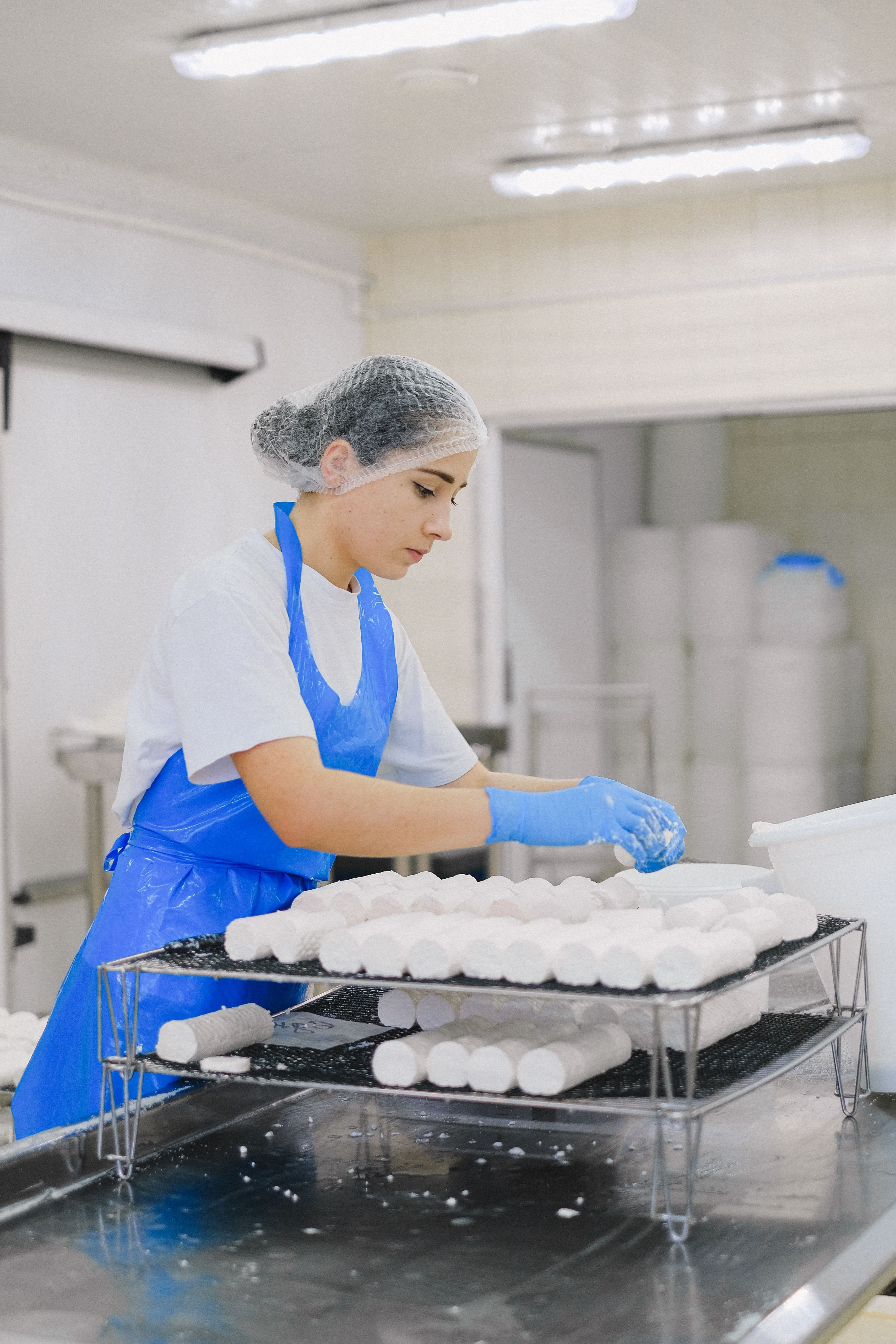
Bakery and confectionery plants have different hygiene risks from meat, dairy or seafood sites. The environment is mostly dry, warm and dusty rather than wet and cold. The product is often ready to eat, loose or only lightly packed, and allergens such as gluten, nuts, milk and egg are present in the same building. Disposable PPE should be chosen for those conditions, not copied from a wet-processing plant.
What is different about bakeries and confectionery
- Flour dust and sugar dust settle on clothing and hair, and fibres from clothing can fall into dough or product.
- Heat makes breathability important, so heavy waterproof garments are hard to wear for a full shift.
- Allergens require segregation between lines. PPE is one of the tools used to stop cross-contact.
- Short-shelf-life, open product raises the consequence of any contamination from hair, fibres or fragments.
Zone by zone
Mixing, dough and ingredient handling
Dust and open product contact. Use a hair net or bouffant cap covering all hair, a beard cover where required, non-woven sleeve covers to protect forearms and keep fibres off product, and a breathable non-woven apron or gown. Reserve PE aprons for tasks that involve wet or sticky product such as cream, filling or washdown.
Baking, depanning and cooling
Heat is the main constraint. Breathable non-woven garments are more comfortable than PE. Make sure sleeve covers do not come near hot surfaces and are replaced if damaged.
Chocolate, sugar and fillings
Wet or sticky product is common. Use PE aprons and sleeves for tasks that involve fillings, enrobing or wet cleaning, and non-woven where the work is dry. Remove and replace PPE if it picks up product that could transfer elsewhere.
Packing and labelling
The risk here is mainly hair and fibre falling into open or loosely packed product. Hair nets, beard covers and sleeve covers remain the core PPE. Colour-coded items help show the area a worker belongs to.
Visitors and maintenance
Issue a hair net, beard cover if relevant, gown or coverall, and shoe covers before entry. Treat contractors the same as visitors, and confirm they leave tools and loose items outside.
Allergen control and colour coding
If your plant runs both allergen and non-allergen lines, colour-coded disposable PPE is a simple, visible control. A common approach assigns one colour to the allergen area and another to the rest of the plant, so cross-over is easy to spot. Replace PPE when moving between lines and dispose of it at the boundary instead of carrying it. For a fuller approach, see Colour-Coding Disposable PPE by Zone.
Choosing between PE and non-woven in a bakery
| Task | Better choice | Why |
|---|---|---|
| Dry mixing, packing, visitors | Non-woven | Breathable, comfortable in warm rooms |
| Cream, filling, washdown | PE | Waterproof, protects clothing from wet product |
| Forearm protection near open product | Non-woven sleeve covers | Light, breathable, keeps fibre off product |
| Floors, short tasks, wet cleaning | PE shoe covers | Waterproof and low cost |
For the full comparison see PE vs Non-Woven Disposable PPE.
Practical tips
- Specify lint-free, non-shedding PPE for areas with open product. Poor-quality material can itself become a contaminant.
- Keep dispensers stocked at every entrance so there is never a reason to skip an item.
- Do not let staff carry PPE between allergen and non-allergen areas.
- Use contrasting colours where fragments could be spotted in product, such as blue against light doughs.
- Replace damaged PPE immediately and record losses of items such as nets and sleeves.
What Disponord supplies
Disponord supplies disposable hair nets, beard covers, non-woven sleeve covers, PE and non-woven aprons, shoe covers and coveralls for food plants, in bulk and in the colours your zoning needs. Gloves are typically sourced separately by plants and are not part of our range. Send your zone list and volumes for a quotation.
Frequently asked questions
- What PPE do bakery workers need?
- At minimum a hair net or cap covering all hair, a beard cover if relevant, a clean apron or gown and appropriate footwear. Sleeve covers are added where forearms contact product.
- Is PE or non-woven better for bakeries?
- Non-woven is usually better in warm, dry areas because it breathes. PE suits wet or sticky tasks.
- Can colour coding help with allergen control?
- Yes. Assigning a distinct colour to allergen areas makes cross-over visible and supports segregation procedures.
- Do confectionery plants need different PPE from bakeries?
- The basics are the same. Confectionery often involves more wet or sticky product, so PE aprons and sleeves are used for those tasks.
Related products
- Head Protection
Disposable Hair Nets
Non-woven bouffant caps with double elastic band for food processing — breathable, controls hair contamination in production and packaging zones.
View product → - Foot Protection
Non-woven Shoe Covers
Breathable non-woven disposable shoe covers for dry food processing and packaging zones — bulk supply from a manufacturer and exporter.
View product → - Arm Protection
Non-woven Sleeve Covers
Breathable non-woven sleeve covers with ultrasonic seams and elastic cuffs — for food handling, packaging and dry processing zones.
View product → - Body Protection
Disposable PE Aprons
Lightweight waterproof polyethylene aprons for food handling and wet processing — knee-length coverage for meat, dairy and packaging zones.
View product →
Need disposable PPE for your facility?
Send us your requirement and we'll get back to you with a quote.
Request a Quote