
Industry guides
Disposable PPE for Tahini, Halva and Nut Processing Plants
14 November 2026 · 3 min read · Disponord
Sesame and nuts are allergens, and tahini is oily: how to use disposable hygiene PPE to control allergen carry-over and oil contact in tahini, halva and nut plants.
Key takeaways
- Sesame, peanuts and tree nuts are allergens, so PPE changes at product changeover are a control in their own right, not only a hygiene habit.
- Tahini and nut pastes are oily: waterproof PE aprons and sleeve covers stay clean where non-woven fabric would soak the oil up.
- A different PPE colour per allergen line makes a mix-up visible on the floor.
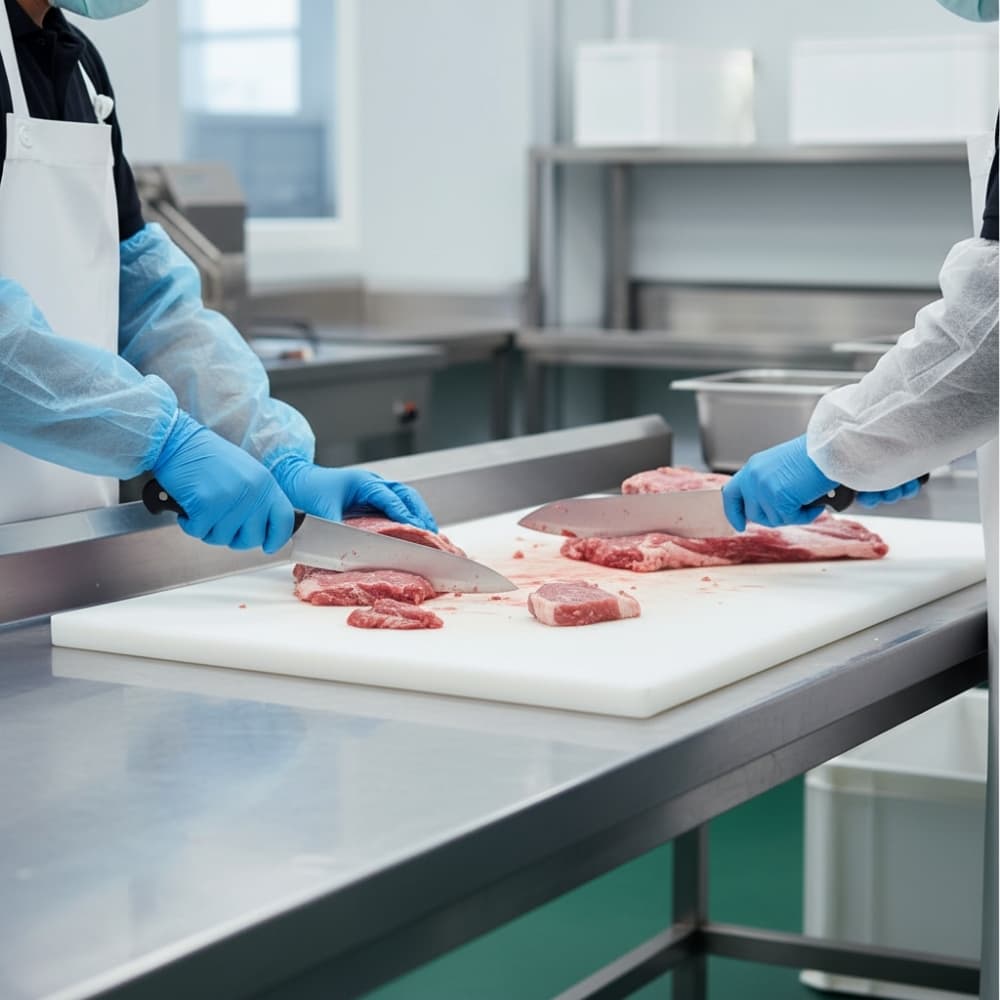
Tahini, halva and nut plants combine two problems. The raw materials, sesame, peanuts, pistachios, almonds and other nuts, are allergens, so residue carried from one line to another is a product safety issue. And the product itself is oily: sesame paste and nut butters cling to sleeves, aprons and footwear. Disposable PPE helps with both, because a garment that is thrown away at changeover cannot carry residue to the next product. This guide covers hair, beard, apron, sleeve and footwear items for roasting, grinding, mixing, filling and packing. Gloves are out of scope here.
Why allergens change the PPE rules
In most food plants PPE protects the product from the person. In an allergen plant it must also stop one product reaching another. Paste on a sleeve or dust on an apron is enough to carry sesame or nut residue to a line that should not contain it. Reusable garments make this hard to control, because they have to be washed and checked between products. Single-use items are simply changed.
- Change aprons and sleeve covers at every changeover between products with different allergens.
- Give each allergen line its own PPE colour and its own stock.
- Place a bin at the exit of each line, so used items do not travel through the plant.
- Apply the same rule to maintenance staff, cleaners and visitors.
Zone-by-zone PPE guide
| Zone | Main risk | Disposable PPE to consider | Note |
|---|---|---|---|
| Raw seed and nut intake | Dust, husk, outside traffic | Hair net, shoe covers, apron | Keep apart from clean zones |
| Washing and hulling of sesame | Water, wet floors | PE apron, PE sleeve covers, boot covers | Change before entering dry zones |
| Roasting | Heat, dry dust | Hair net, beard cover | Light, breathable items |
| Grinding and tahini lines | Oily paste, splash | PE apron, PE sleeve covers, hair net, beard cover | Replace when soiled |
| Halva mixing and moulding | Warm sticky mass, manual handling | PE apron, PE sleeve covers, hair net, beard cover | Clean PPE at changeover of flavours with nuts |
| Filling and packing | Hair, fibre, allergen carry-over | Hair net, beard cover, sleeve covers | Colour per line |
| Visitors and contractors | Moving between allergen lines | Visitor gown, hair net, shoe covers | Fresh set per line |
PE for oily zones, non-woven for dry zones
Non-woven fabric absorbs oil, so in grinding, tahini and halva areas a disposable PE apron and PE sleeve covers are the practical choice: oil stays on the surface and the item is discarded. In roasting and dry packing, breathable non-woven items are more comfortable and are worn properly for longer. Hair nets and beard covers are needed in every zone. The same reasoning applies in oil and sauce plants; see Disposable PPE for Edible Oil, Sauce and Condiment Plants.
Colour-coding by allergen line
A colour rule is the cheapest allergen control there is. If the sesame line wears one colour and the pistachio line another, anyone in the wrong colour is noticed at once. Keep the scheme small, two or three colours, and write it on the wall at every entrance. The method is described in Colour-Coding Disposable PPE by Zone.
Planning volume
Allergen plants use more aprons and sleeve covers than headcount alone suggests, because every changeover is an extra change. Count staff per line and shift, add the number of changeovers per day, then add visitors, contractors and a safety margin. Convert the total to cartons and plan orders around your lead time.
Disponord manufactures and exports disposable hygiene PPE for food plants. Send your lines and monthly volumes through the quote form; delivery is typically 7 to 21 days in total, production and shipping combined.
Frequently asked questions
- How does disposable PPE help with allergen control?
- A single-use apron or sleeve cover is discarded at changeover, so it cannot carry sesame or nut residue to the next product. Combined with a colour per line and a bin at each exit, it makes the control visible. PPE supports an allergen plan; it does not replace cleaning and validation.
- Which apron is best for tahini and nut paste lines?
- A waterproof PE apron is the usual choice, because oil stays on the film and does not soak through. State the thickness, length and width in the order, and change the apron as soon as it is soiled.
- Should each allergen line have its own PPE colour?
- It is a common and effective practice. A different colour per line lets supervisors see at a glance when someone has crossed from one allergen area to another without changing.
Related products
- Head Protection
Disposable Hair Nets
Non-woven bouffant caps with double elastic band for food processing — breathable, controls hair contamination in production and packaging zones.
View product → - Face Protection
Disposable Beard Covers
Single-use non-woven beard covers with a single elastic loop — for food processing, meat plants and food service kitchens.
View product → - Arm Protection
PE Sleeve Covers
Waterproof polyethylene sleeve covers with elastic cuffs — for food handling and wet processing zones in meat, seafood and dairy plants.
View product → - Body Protection
Disposable PE Aprons
Lightweight waterproof polyethylene aprons for food handling and wet processing — knee-length coverage for meat, dairy and packaging zones.
View product →

Need disposable PPE for your facility?
Send us your requirement and we'll get back to you with a quote.
Request a Quote