
Products & specs
Face Masks in Food Plants: When to Require Them and How to Specify
17 October 2026 · 4 min read · Disponord
When food sites require disposable 3-ply hygiene masks, how to choose ear-loop or tie styles, nose wire and colour, and what to put in a bulk order specification.
Key takeaways
- Masks in food plants are a hygiene control, so requirements come from your own site policy, customer specifications and local rules.
- Choose ear-loop for speed and visitors, ties for a firmer fit on long shifts, and decide on nose wire against your own foreign-body procedure.
- Pair the mask with a hair net and, where needed, a beard cover, and test the combination on samples before ordering.
- A bulk specification needs layers, fastening, nose wire, colour, size, packing and monthly volume.
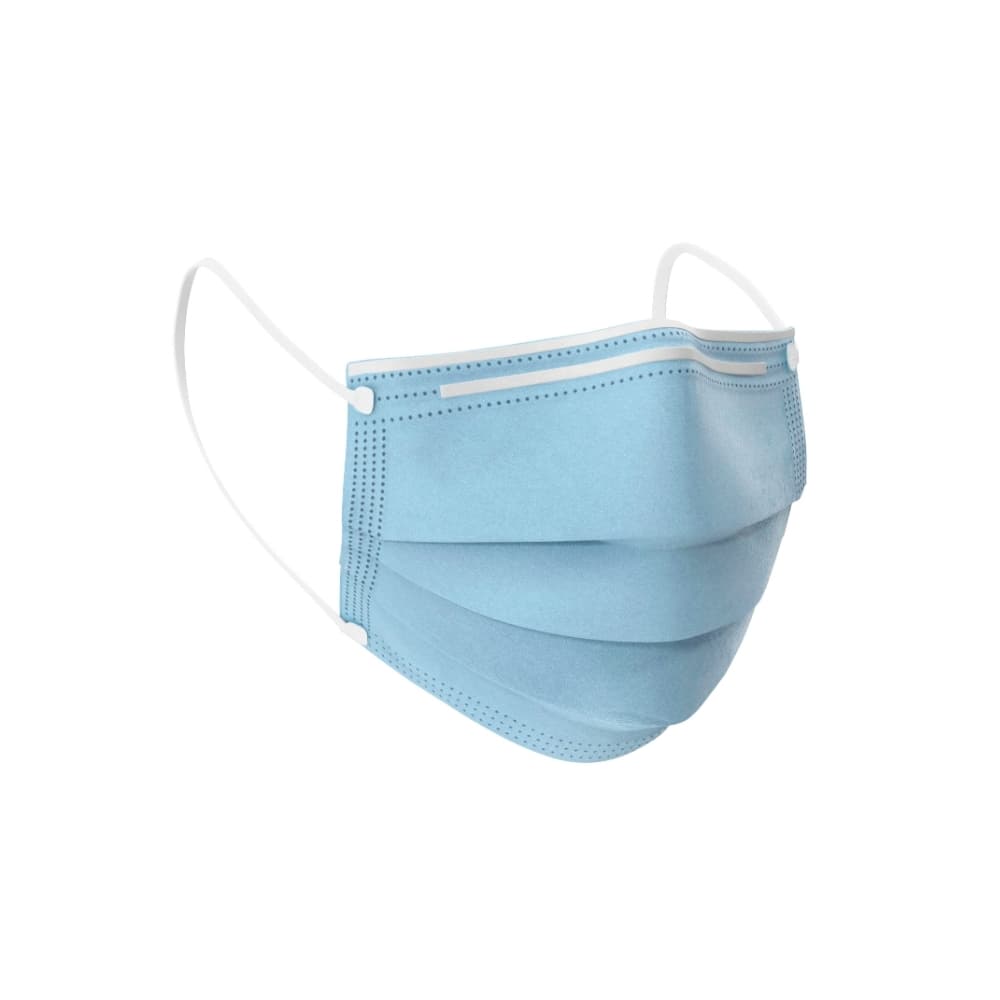
A mask in a food plant is a hygiene control, not a medical measure. Its job is to keep droplets, saliva and loose hair or skin particles away from product. This guide covers when sites typically require disposable 3-ply face masks in food production, how to choose between ear-loop and tie styles, and how to write a specification that works for bulk orders. It describes hygiene masks for food production; they are not presented as medical or respiratory protection.
When food plants ask for masks
There is no single rule. Requirements come from the site hygiene policy, customer specifications and local rules, so check your own audit scheme and local rules. In practice, masks are most often required in these situations:
- High-care and high-risk areas, where ready-to-eat product is handled after cooking or washing and any contamination goes straight to the consumer.
- Packing and slicing lines, where product is open and staff work close to it for long periods.
- Bakery and confectionery areas with flour, sugar or cocoa dust, where a mask also keeps dust off the mouth and nose.
- Visitors, auditors and contractors entering production areas, where a mask is issued at the entry station with the rest of the kit.
- Staff with a cough or cold, or with facial hair that cannot be fully covered, as set by the plant illness policy.
Ear-loop or tie: choosing the fastening
Ear-loop masks are quick to put on and take off, which suits visitors and short tasks. Tie masks use ties at the head and neck and hold more securely across a shift, but they take longer to fit and need more care when removing. Choose by how long the mask is worn and how many people use it each day.
| Feature | Options | What to consider |
|---|---|---|
| Fastening | Ear-loop or head ties | Ear-loop for speed and visitors; ties for a firmer fit on long shifts |
| Nose wire | With or without | A wire helps the mask sit snug on the nose, but it is a metal part, so check it against your own foreign-body procedure |
| Layers | 3-ply | Non-woven outer layer, filter layer and a soft inner layer against the skin |
| Colour | Blue, white or other | Blue contrasts with most food, so a dropped mask is easy to see |
| Size and fit | Standard adult size | Confirm width and length so the mask covers nose, mouth and chin |
| Packing | Boxes inside cartons | Confirm pieces per box and boxes per carton to plan usage |
What the three layers do
A 3-ply mask normally has an outer non-woven layer, a middle filter layer and a soft inner layer that touches the skin. For food production the main aim is a comfortable, close-fitting barrier that staff will keep wearing for a full shift. Compare samples side by side instead of relying on a description.
Colour and detectability
Colour is a control. Blue is the usual choice because it rarely matches food, so a mask that falls into product is easy to spot. If your site uses metal detection or X-ray, ask about the nose wire material and agree how your own system will be tested. Some sites choose masks without a nose wire in open-product areas for this reason. Record the decision in your hygiene procedure.
Pairing the mask with a beard cover and hair net
A mask covers the nose, mouth and chin, but not hair. Hair net or bouffant cap, beard cover where facial hair is present, and mask are normally worn as a set. Put the hair net on first, then the beard cover, then the mask, so that no loop or tie is trapped under another item. Ear-loop masks can sit awkwardly with beard covers that also use elastic loops, so test the combination on samples before you order.
Storage and disposal
- Store cartons off the floor, in a clean, dry area away from raw ingredients and chemicals.
- Keep masks in their box or a closed dispenser at the entry station, so they are not handled by many people.
- Issue a fresh mask on each entry and replace it when damp, soiled or damaged, as your procedure sets out.
- Remove masks at the area boundary, dispose of them in a lidded bin and wash hands afterwards.
- Do not allow masks to be worn around the neck or kept in a pocket.
How to specify masks for bulk orders
- Layers: 3-ply, with the layer construction stated.
- Fastening: ear-loop or head ties.
- Nose wire: with or without, and the wire material if relevant to your detection system.
- Colour and size.
- Packing: pieces per box and boxes per carton.
- Volume: expected monthly use and delivery frequency.
- Samples: approve a sample on the real task before the bulk order.
To estimate monthly volume, count the people entering masked areas per shift, add visitors and contractors, and allow a buffer for changes in staffing.
Disponord manufactures and exports disposable hygiene PPE, including 3-ply face masks, hair nets and beard covers. Request a quote on the website with your specification and monthly volume. Delivery is typically 7 to 21 days in total, production and shipping combined.
Browse all products & specs guides →
Frequently asked questions
- Are face masks required in food plants?
- It depends on the site hygiene policy, customer specifications and local rules. Masks are common in high-care areas, packing, bakery dust areas and for visitors. Check your own audit scheme and local rules.
- Should I choose ear-loop or tie masks?
- Ear-loop masks are faster and suit visitors and short tasks. Tie masks give a firmer fit over a long shift but take longer to put on. Choose by wear time and number of users.
- Should food plant masks have a nose wire?
- A nose wire improves fit but is a metal part. If you use metal detection or X-ray, ask about the wire material and agree a test, or choose masks without a nose wire in open-product areas.
- Can masks be worn with a beard cover?
- Yes. Put the hair net on first, then the beard cover, then the mask. Test the combination on samples, as elastic loops from both items can interfere.
- How often should masks be changed?
- Set this in your own procedure. A common approach is a fresh mask on every entry, and a replacement whenever the mask is damp, soiled or damaged.
Related products
- Head Protection
Disposable Hair Nets
Non-woven bouffant caps with double elastic band for food processing — breathable, controls hair contamination in production and packaging zones.
View product → - Face Protection
Disposable Beard Covers
Single-use non-woven beard covers with a single elastic loop — for food processing, meat plants and food service kitchens.
View product → - Face Protection
3-Ply Face Masks
3-ply disposable masks with meltblown filter layer. Ear-loop, white or blue. Bulk supply for medical, food and industrial use.
View product →

Need disposable PPE for your facility?
Send us your requirement and we'll get back to you with a quote.
Request a Quote