
Compliance & hygiene
Donning and Doffing Disposable PPE: A Training Sequence for Food Plant Staff
17 October 2026 · 4 min read · Disponord
How to train staff to put on and remove disposable hygiene PPE correctly: a donning order, doffing routine, hand washing points, common mistakes, spot checks and a simple training record.
Key takeaways
- Fix one donning order and one doffing order, write it down and teach it the same way on every shift.
- Most failures are habit failures: nets that miss the ears, masks under the nose, aprons worn out of the zone and items reused after a break.
- A two-minute supervisor check at the entry and a simple signed training record turn a one-off talk into a routine.
- Follow your plant's own procedure and audit scheme; the order below is a general starting point.
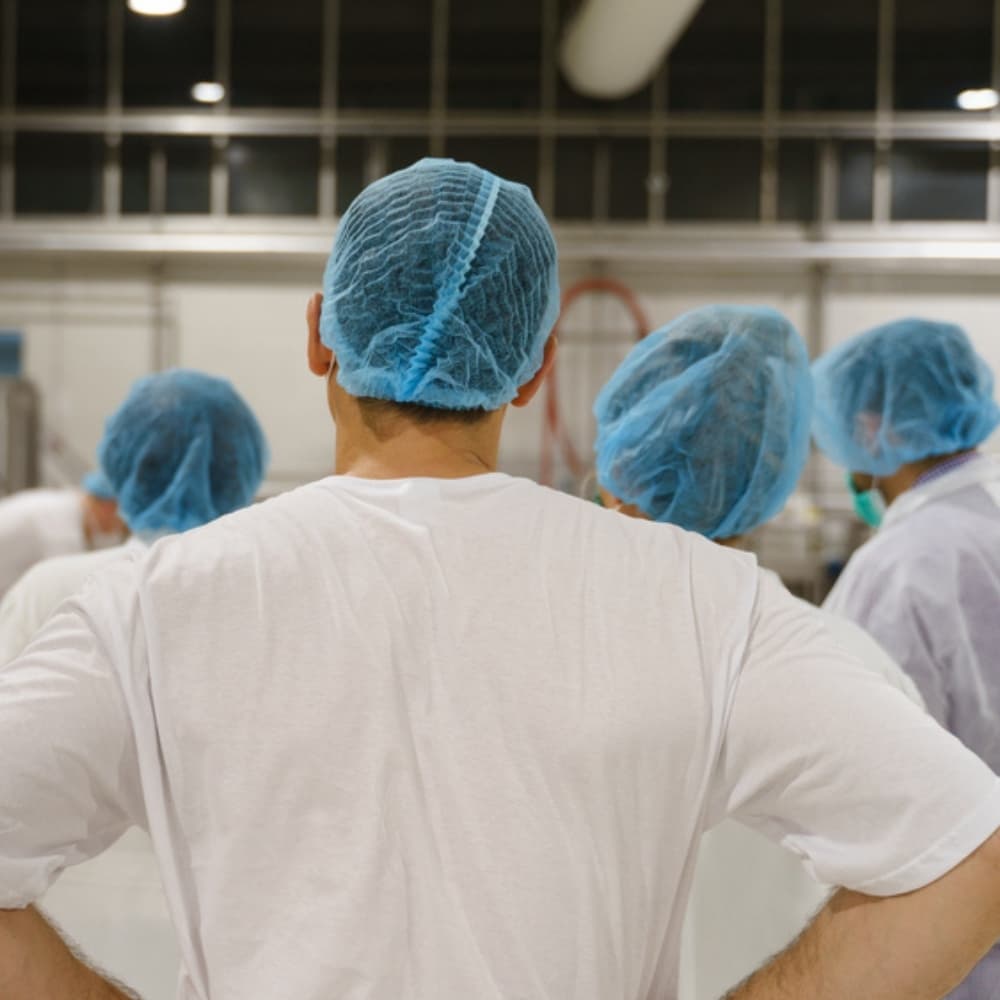
A hair net that leaves the ears exposed or a mask worn below the nose does little good. Most PPE failures in food plants are habit failures, not supply failures. This guide sets out a simple training sequence for putting on and removing disposable hygiene PPE, the mistakes to watch for and how to keep a light record. Always follow your plant's own procedure and check your own audit scheme and local rules where they differ from the general order shown here.
Why training matters as much as the item
Staff learn PPE by watching colleagues. Without a short, standard routine, each shift develops its own habits: nets pushed back off the forehead, aprons worn into the canteen, shoe covers kept for another day. Training turns the specification into practice, and it gives the supervisor something concrete to check.
Donning order: top down
Most plants work from the top down, so that nothing falls onto garments already put on. Your procedure may differ; fix one order and teach it.
- Wash and dry your hands at the entry point before touching any PPE.
- Hair net: all hair, including fringe and sideburns, inside the net, with the band sitting evenly and the ears covered if your procedure requires it.
- Face mask, where used in the area: over nose and mouth, with the nose clip pressed to shape.
- Beard cover: over beard and moustache, with the loops behind the ears and the cover below the chin.
- Gown, coverall or apron: tie or fasten every closure, with the neck and waist secure.
- Sleeve covers: pulled over the cuffs of the work clothing so no bare skin or personal clothing shows.
- Shoe or boot covers: put on last, at the barrier, then check both feet.
- Wash or sanitise your hands again, then take a quick look in the mirror before entering the production area.
Doffing at exit: remove and dispose
Removal protects the clean area as much as putting on does. Teach it as a fixed routine at the exit point:
- Remove shoe or boot covers at the exit line, without stepping onto the outer floor with the covers on.
- Take off the apron, gown or coverall by touching the inside, rolling it away from the body, and putting it straight into the waste bin.
- Remove sleeve covers, then mask, beard cover and hair net, pulling them off carefully so nothing shakes loose.
- Dispose of everything in the bin provided. Do not carry used items out of the zone or keep them for later.
- Wash your hands as the last step.
Hand washing points
Mark the washing points on the route: before PPE at the entry, again before the production door, and after removal at exit. Staff should also wash after breaks, toilet use and any task that touches waste or packaging. Place soap, towels and a bin at each point, and keep instructions short and visual.
Common mistakes and how to coach them
| Mistake | Why it matters | Coaching point |
|---|---|---|
| Nose outside the mask | Breathing and droplets reach the product area | Press the nose clip, check in the mirror |
| Hair net not covering ears or fringe | Loose hair and dandruff fall onto product | Tuck all hair in, ears covered if required |
| Beard cover under the nose or off the chin | Beard hair is left exposed | Loops behind the ears, cover below the chin |
| Apron worn outside the zone | Carries contamination to clean areas | Remove at the exit line, never to the canteen or toilet |
| Reusing items after a break | Used items may be contaminated or damaged | Dispose at exit, take a new item on return |
| Sleeve covers pulled down, leaving a gap | Bare arms or clothing exposed | Pull over the cuff, check both arms |
| Shoe covers worn outside | Soiled covers bring dirt in | Put on at the barrier only |
Supervisor spot checks
A two-minute check at the entry each shift is enough: stand at the barrier, look at hair, ears, mask, beard, sleeves and feet, and correct on the spot. Correct quietly. Note repeat issues, since they usually point to a poor fit, a missing size or a dispenser that is out of stock rather than carelessness.
A simple training record
Keep one sheet per person with name, date, trainer, items covered, a tick that the person demonstrated the sequence correctly, a signature and a refresher date. Short records show an auditor that the routine is taught and checked.
Induction for new and temporary staff
New starters and agency staff should not enter the zone before a short induction: a demonstration, then the person repeats the sequence while the trainer watches. Provide the right sizes during induction, since a net that is too big or boots that are too small are common reasons for skipped steps. Repeat the check on the first shifts, and treat visitors and contractors the same way with a shorter version.
Disponord manufactures and exports disposable hygiene PPE for food plants. Request a quote on our website, and plan for delivery typically 7 to 21 days in total, production and shipping combined.
Browse all compliance & hygiene guides →
Frequently asked questions
- In what order should hygiene PPE be put on?
- Most plants work top down: wash hands, hair net, mask if used, beard cover, gown or apron, sleeve covers, then shoe or boot covers, followed by a final hand wash. Follow your plant's own procedure if it differs.
- Should a hair net cover the ears?
- That depends on your plant's procedure and audit scheme. Whichever rule applies, all hair including fringe and sideburns must be inside the net, and the net should sit evenly on the head.
- Can staff reuse disposable PPE after a break?
- Disposable items are made for single wear. Dispose of them at the exit and take new ones when returning to the zone, unless your own procedure states otherwise.
- How often should PPE training be repeated?
- Train at induction, check on the first shifts, and repeat at intervals set in your own procedure. Retrain after any observed mistake that keeps recurring.
- What should a training record contain?
- Name, date, trainer, items covered, a confirmation that the person demonstrated the sequence, a signature and a refresher date.
Related products
- Head Protection
Disposable Hair Nets
Non-woven bouffant caps with double elastic band for food processing — breathable, controls hair contamination in production and packaging zones.
View product → - Face Protection
Disposable Beard Covers
Single-use non-woven beard covers with a single elastic loop — for food processing, meat plants and food service kitchens.
View product → - Foot Protection
PE Shoe Covers
Waterproof PE disposable shoe covers for wet food processing zones — controls floor cross-contamination in meat, seafood and dairy areas. Bulk supply.
View product → - Body Protection
Disposable PE Aprons
Lightweight waterproof polyethylene aprons for food handling and wet processing — knee-length coverage for meat, dairy and packaging zones.
View product →

Need disposable PPE for your facility?
Send us your requirement and we'll get back to you with a quote.
Request a Quote