
Industry guides
Slaughterhouse PPE Checklist: Disposable Items by Area
1 October 2026 · 2 min read · Disponord
A practical area-by-area checklist of disposable PPE for slaughterhouses and meat plants, from lairage and the kill floor to chilling and dispatch.
Key takeaways
- A slaughterhouse checklist works best when organised by area, because the hazard changes between the kill floor, chilling and dispatch.
- Waterproof polyethylene covers the wet and high-contact areas; non-woven suits dry handling and visitor access.
- Local regulation and your own HACCP plan decide what is mandatory — a checklist supports them, it does not replace them.
A slaughterhouse is one of the harshest hygiene environments in the food industry: blood, fat, water and constant contact with raw carcasses. Specifying disposable PPE for it works best as a checklist built around areas of the plant, because the garment that suits the kill floor is not the one that suits chilling or dispatch. This checklist sets out the disposable items normally used in each area. It is a practical buying guide, not a regulatory document: what is mandatory at your site is defined by local legislation, customer requirements and your own HACCP plan.
Lairage and reception
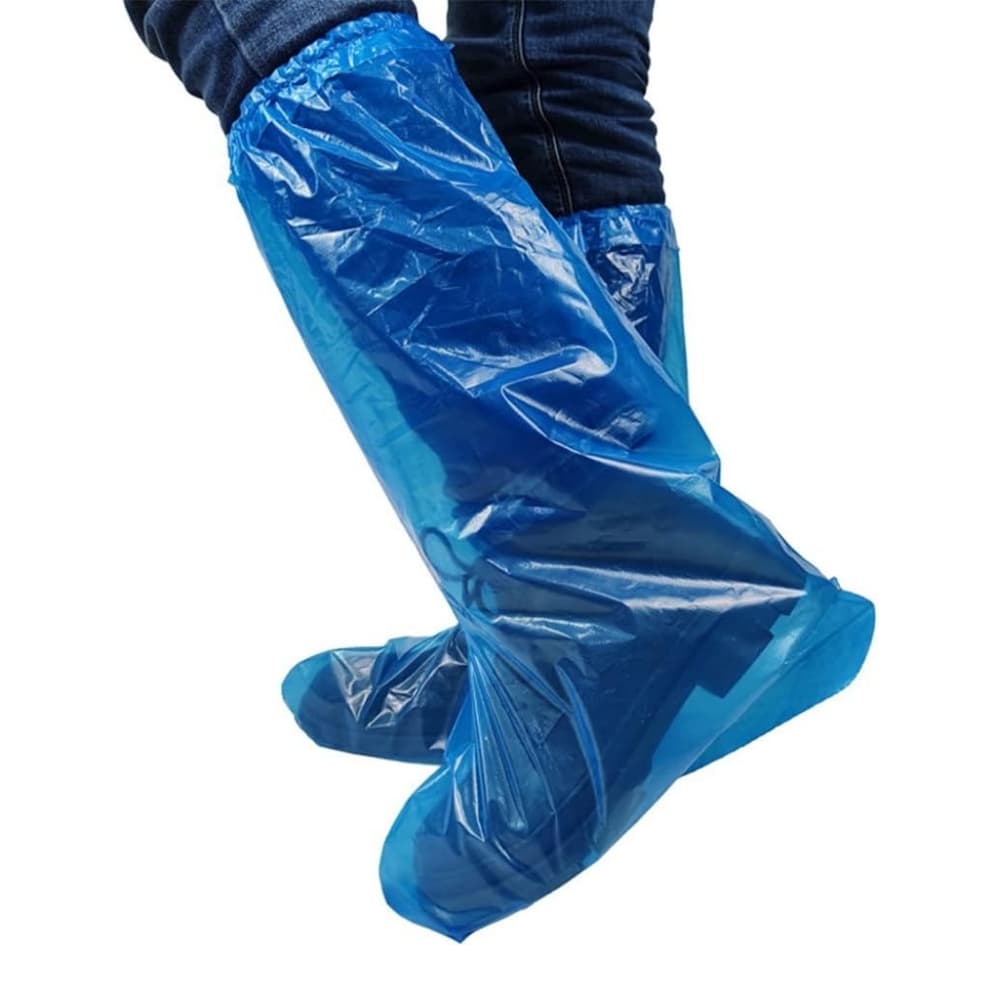
Staff here work around live animals and the earliest, dirtiest part of the process. The priority is keeping that contamination from travelling further into the plant. Visitors and inspectors entering this area should use single-use boot covers and a disposable apron or gown, which they remove before moving on.
Kill floor, evisceration and splitting
This is the highest-contact, wettest area. Operators need waterproof body protection: a disposable PE apron or a PE long apron for heavy splash, with PE sleeve covers to close the glove gap. Hair nets and beard covers are required on every person on the floor. Single-use items are changed whenever they are soiled, rather than at fixed intervals.
Chilling, boning and cut-up
As the product moves to chilling and boning, the hazard shifts from heavy splash to cross-contamination between carcasses and cuts. PE aprons and sleeve covers remain appropriate where washdown is frequent; where operators work at dry cutting tables for long periods, non-woven sleeve covers are more comfortable and just as effective at controlling fibres. See our related guide to PPE for meat processing plants.
Packing, dispatch and visitors
Packing and dispatch areas deal with finished product, so the standard is higher. Hair nets, beard covers and breathable sleeve covers are normal here. Visitors, auditors and contractors should receive a defined kit rather than improvising one at the door.
- Lairage and reception — boot covers and apron for visitors, hair net
- Kill floor and evisceration — PE apron or long apron, PE sleeve covers, hair net, beard cover
- Chilling and boning — PE apron, PE or non-woven sleeve covers by task, hair net, beard cover
- Packing and dispatch — non-woven sleeve covers, hair net, beard cover
- Visitors and contractors — hair net, beard cover, gown or coverall, shoe or boot covers
Using the checklist
Print the checklist, adapt it to your plant and post the relevant section at each entrance. The most common failure is not a missing specification but an empty box on a shelf, so assign someone responsibility for restocking each point of use. Disponord manufactures and exports single-use hygiene consumables suitable for HACCP-controlled environments and supplies meat processors in bulk. If you want a kit proposal for your plant, send us the requirement through the quote form.
Frequently asked questions
- What PPE do slaughterhouse workers wear?
- Typically waterproof aprons or long aprons, sleeve covers, hair nets and beard covers, plus site-specific protective equipment. Disposable items are widely used because they can be changed whenever soiled, and visitors usually receive single-use boot covers and aprons.
- Is disposable PPE mandatory in slaughterhouses?
- That depends on local regulation, customer requirements and the plant's own HACCP plan. Disposable PPE is a common way to meet those requirements, but the obligation comes from the rules that apply at your site.
Related products
- Foot Protection
Disposable Boot Covers
Waterproof polyethylene boot covers (anti-slip sole option) for slaughterhouses and wet food plants — full lower-leg coverage, bulk packaging for facility use.
View product → - Arm Protection
PE Sleeve Covers
Waterproof polyethylene sleeve covers with elastic cuffs — for food handling and wet processing zones in meat, seafood and dairy plants.
View product → - Body Protection
Disposable PE Aprons
Lightweight waterproof polyethylene aprons for food handling and wet processing — knee-length coverage for meat, dairy and packaging zones.
View product → - Body Protection
Disposable PE Long Aprons
Ankle-length waterproof polyethylene aprons for maximum coverage in seafood, fish and heavy wet food-processing environments.
View product →



Need disposable PPE for your facility?
Send us your requirement and we'll get back to you with a quote.
Request a Quote