
Industry guides
Disposable PPE for Poultry Processing: A Zone-by-Zone Guide
1 October 2026 · 3 min read · Disponord
From evisceration to packing, a poultry plant has very different hygiene hazards in each zone. Here is how to specify disposable PPE for each one instead of buying a single item for the whole site.
Key takeaways
- A poultry plant is several hygiene environments under one roof, and PPE should be specified per zone, not per site.
- Wet, high-contact zones need waterproof polyethylene; dry cut-up and packing zones are better served by breathable non-woven.
- Single-use items removed at zone boundaries make cross-contamination between raw and packed product easier to control and to audit.
Raw poultry is routinely associated with bacteria such as Salmonella and Campylobacter, which is why hygiene in a poultry plant is managed zone by zone rather than as a single standard for the whole building. An operator on the evisceration line and an operator on the packing line are exposed to completely different hazards, and the PPE that suits one is often wrong for the other. This guide walks through a typical poultry plant from raw reception to dispatch and sets out what disposable PPE makes sense in each area, so that procurement can specify a defined kit per zone instead of buying one product and hoping it covers everything.
Why zone-based specification matters in poultry
The core hygiene problem in poultry processing is moving from a high-contamination environment to a low-contamination one without carrying anything across. Water, feathers, blood and fat all travel on clothing, hands and footwear. Single-use PPE is useful precisely because it can be put on at the entrance to a zone and removed at the exit, so nothing from the raw side follows an operator into the clean side. The question for a buyer is therefore not which item is best in general, but which item fits the hazard in each zone.
Evisceration, washdown and chilling: waterproof barriers
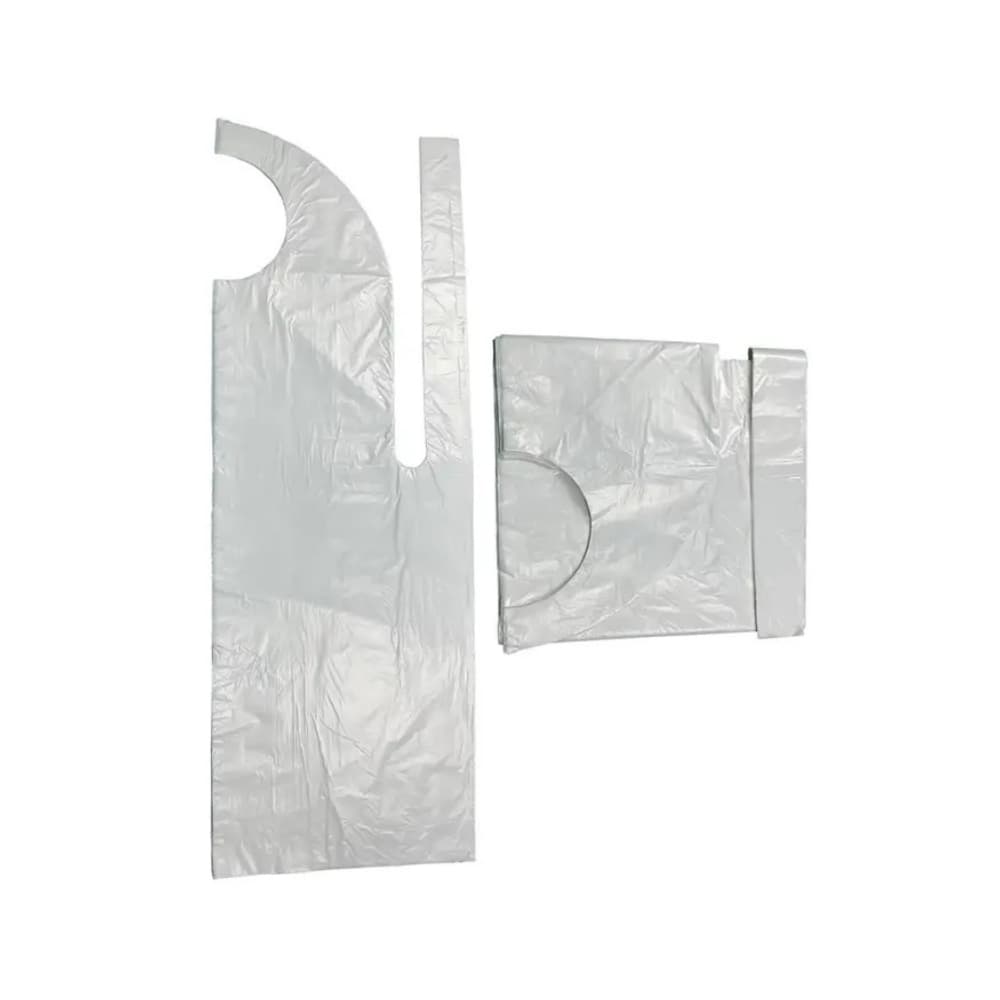
In the wet zones — evisceration, giblet handling, washdown and chilling — liquid is the main hazard, and the garment has to repel it. Polyethylene is the right material here because it is waterproof and inexpensive enough to change as often as the process demands. A disposable PE apron protects the front of the body and the operator's work clothing, and PE sleeve covers close the gap between glove and sleeve, which is where splash tends to get through. For stations with heavy splash, a PE long apron extends coverage to the lower leg.
Cut-up, deboning and packing: breathable non-woven
Further down the line the hazard changes. In cut-up, portioning and packing, the operator is working for long periods, liquid contact is lower, and the priority is controlling fibres and keeping the operator comfortable enough to keep the PPE on. Non-woven items breathe, which is why they hold up across a full shift where plastic does not. Non-woven sleeve covers are the usual choice for the forearm in these zones, and for a longer explanation of the trade-off see our guide to non-woven arm sleeves.
Head, face and foot protection across the plant
Some items apply everywhere. Every operator in a food-handling area needs hair covered, so disposable hair nets are standard issue from the first step inside the plant, and where operators have beards, beard covers close the same gap. For footwear, disposable boot covers are used for visitor, maintenance and contractor access into wet areas, where a short-duration cover over street or work footwear is more practical than issuing dedicated boots.
- Reception and evisceration — PE apron, PE sleeve covers, hair net, beard cover where applicable
- Chilling and washdown — PE long apron or PE apron, PE sleeve covers, boot covers for visitors and maintenance
- Cut-up, deboning and portioning — non-woven sleeve covers, hair net, beard cover
- Packing and dispatch — non-woven sleeve covers, hair net, beard cover
- Visitors and contractors — hair net, beard cover, visitor gown or coverall, shoe or boot covers as the zone requires
Resupply and consistency
A zone kit only works if it is physically available at the zone entrance at every shift. Running out of one item is how a rule gets skipped, and a rule that is skipped once is easily skipped again. Buying one consistent specification in bulk, rather than whatever is available that week, also makes it easier to demonstrate to an auditor that the same controls apply across every shift and site. Disponord manufactures and exports single-use hygiene consumables suitable for HACCP-controlled environments, and supplies food processors in bulk. If you want help mapping a kit to your plant layout, or a sample set to trial on a line, send us the requirement through the quote form.
Frequently asked questions
- What PPE is used in poultry processing plants?
- Typically hair nets and beard covers everywhere, waterproof PE aprons and sleeve covers in wet zones such as evisceration and washdown, breathable non-woven sleeve covers in cut-up and packing, and boot or shoe covers for visitor and maintenance access. The exact kit depends on the zone.
- Why use disposable PPE in a poultry plant?
- Single-use items can be put on at a zone entrance and removed at the exit, so contamination from raw zones does not travel to cleaner areas. They also remove the laundering step and make it easier to show an auditor that every operator started the shift with clean PPE.
Related products
- Head Protection
Disposable Hair Nets
Non-woven bouffant caps with double elastic band for food processing — breathable, controls hair contamination in production and packaging zones.
View product → - Foot Protection
Disposable Boot Covers
Waterproof polyethylene boot covers (anti-slip sole option) for slaughterhouses and wet food plants — full lower-leg coverage, bulk packaging for facility use.
View product → - Arm Protection
PE Sleeve Covers
Waterproof polyethylene sleeve covers with elastic cuffs — for food handling and wet processing zones in meat, seafood and dairy plants.
View product → - Body Protection
Disposable PE Aprons
Lightweight waterproof polyethylene aprons for food handling and wet processing — knee-length coverage for meat, dairy and packaging zones.
View product →



Need disposable PPE for your facility?
Send us your requirement and we'll get back to you with a quote.
Request a Quote