
Industry guides
PPE for Frozen Food Plants and Cold Rooms
9 October 2026 · 3 min read · Disponord
Cold rooms change how disposable PPE fits and feels. What to specify for freezer and chiller areas, and what disposable PPE does and does not do in the cold.
Key takeaways
- Disposable PPE is a hygiene layer, not cold-weather protection; it goes over thermal clothing and must be sized to fit over it.
- Test samples at working temperature, because thin films and fabrics can feel stiffer and tear differently in the cold.
- Frost and condensation make footwear control and floor conditions part of the PPE decision.
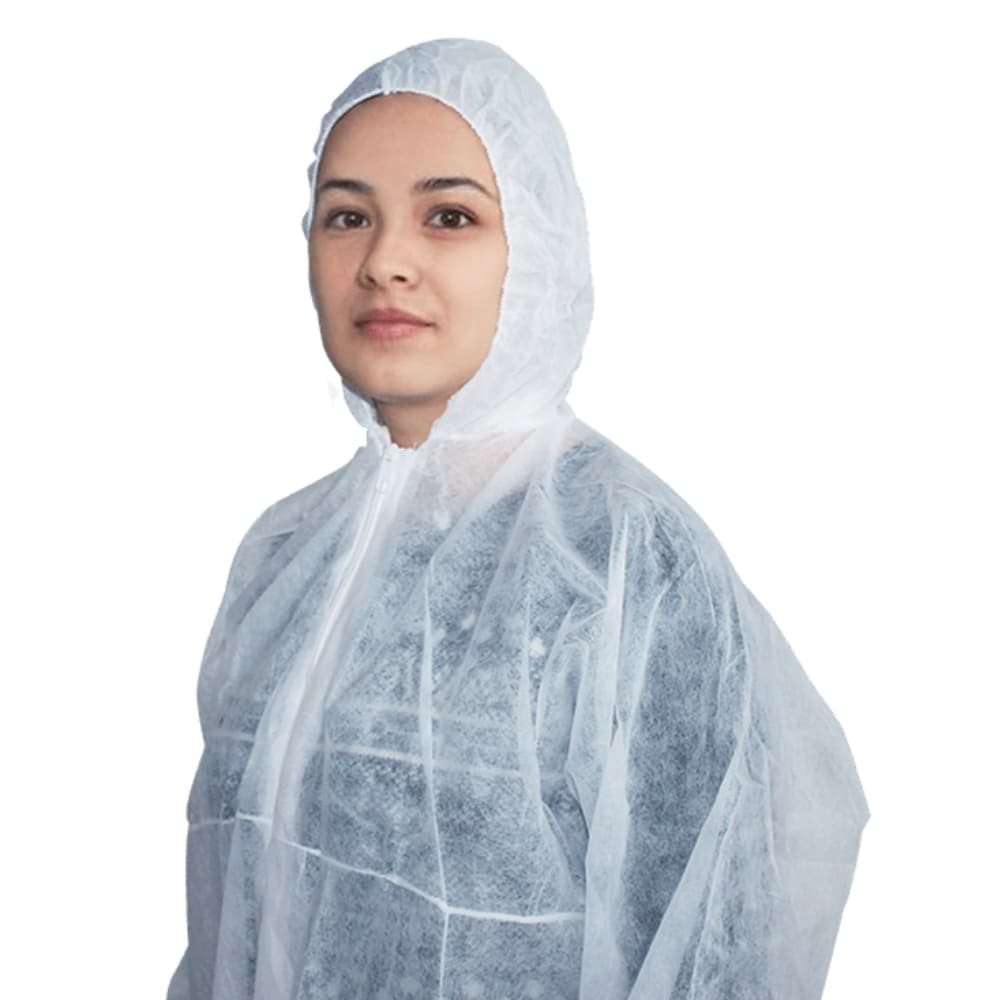
Freezers, chillers and cold rooms add a problem that ambient plants do not have: people arrive in thick thermal clothing, and the single-use PPE has to go on top of it. Garments that fit well in a warm room can split, ride up or hamper movement once the wearer is dressed for minus temperatures. This guide covers what to specify for cold areas and, just as important, what disposable PPE cannot do.
A hygiene layer, not cold protection
Disposable aprons, gowns, coveralls and sleeve covers are there to keep clothing and people from contaminating product. They do not insulate, and they should not be bought or described as cold-weather protection. Thermal jackets, gloves and boots are the worker's own protective equipment, normally supplied by the plant, and the disposable layer sits above or alongside them as part of the hygiene routine.
Sizing over thermal clothing
The most frequent failure in cold areas is a garment that is too small. A coverall or gown sized for a worker in shirtsleeves will pull across the shoulders and split at the seams when worn over a padded jacket. Specify the larger end of the size range for cold-room staff, check sleeve length and elastic openings over thick cuffs, and trial the sizes with the people who actually wear them. See the Disposable Coveralls guide for what to check in construction.
PE or non-woven in the cold
Both materials work in cold areas, but they behave differently. PE is waterproof, which helps where there is frost melt, washdown or wet product, though thin film can feel stiffer and noisier at low temperature. Non-woven is softer and quieter and handles movement well, but it is not waterproof. Test samples at the actual working temperature before committing to a large order, and choose by the task rather than by the temperature alone. The general comparison is in PE vs Non-woven Disposable PPE.
Hair, beard and footwear in cold rooms
- Hair net and beard cover go on before the hood or thermal hat, so no hair escapes at the edges.
- Where staff wear thermal hats, check that the hair net stays in place underneath and is not pushed up.
- Wet or icy floors raise the importance of grip. Test shoe and boot covers on your own floor before choosing.
- Dispose of covers at the cold-room door and do not carry them back to ambient areas.
Practical tips
- Keep spare PPE inside a dry, closed cabinet near the cold-room entrance, since frost and condensation can damage open packs.
- Use a distinct colour for cold-room staff if the plant colour-codes by area. See Colour-Coding Disposable PPE by Zone.
- Re-check consumption in winter and summer, since changing rates and breaks alter how often staff re-enter and re-dress.
What Disponord supplies
Disponord manufactures and exports non-woven coveralls, hair nets, beard covers, sleeve covers, shoe and boot covers and PE aprons for food processing. If you work in cold areas, send us the sizes you need and the working conditions through the quote form and we will suggest a specification and sample options.
Frequently asked questions
- Is disposable PPE suitable for cold rooms?
- It is suitable as a hygiene layer worn over thermal clothing. It does not provide thermal protection, so the plant still needs its own cold-weather gear.
- What size disposable coverall do I need over thermal clothing?
- Usually the larger end of the size range. Trial sizes with the actual wearers, because a coverall that fits in shirtsleeves can split over a padded jacket.
- Is PE or non-woven better in a freezer?
- It depends on the task. PE is waterproof but can feel stiffer in the cold, while non-woven is softer but not waterproof. Test samples at working temperature.
Related products
- Head Protection
Disposable Hair Nets
Non-woven bouffant caps with double elastic band for food processing — breathable, controls hair contamination in production and packaging zones.
View product → - Foot Protection
Non-woven Shoe Covers
Breathable non-woven disposable shoe covers for dry food processing and packaging zones — bulk supply from a manufacturer and exporter.
View product → - Arm Protection
Non-woven Sleeve Covers
Breathable non-woven sleeve covers with ultrasonic seams and elastic cuffs — for food handling, packaging and dry processing zones.
View product → - Body Protection
Disposable Coveralls
Non-woven coveralls with front zipper closure — full-body contamination barrier for food processing, packaging and production zones.
View product →
Need disposable PPE for your facility?
Send us your requirement and we'll get back to you with a quote.
Request a Quote