
Industry guides
Disposable PPE for Cold Stores and Chilled Food Warehouses
16 October 2026 · 3 min read · Disponord
Which disposable hygiene items work in chilled and frozen storage, how cold affects materials, and how to separate thermal clothing from the hygiene layer.
Key takeaways
- In cold stores, thermal clothing keeps people warm and disposable PPE is the hygiene layer on top; they are separate decisions.
- Cold changes how materials behave, so test samples at working temperature before a bulk order.
- Entry and exit points matter most: dispense and dispose of PPE at the door, not inside the cold room.
Cold storage looks like a low-risk area compared with an open processing line, but it is where product is handled, picked and loaded, and where visitors and drivers come and go. The question is what disposable PPE belongs there and how cold changes the choice. This guide separates the hygiene layer from thermal clothing, looks at how common materials behave at low temperature, and lists what to specify for chilled and frozen stores.
Thermal clothing and hygiene PPE are different things
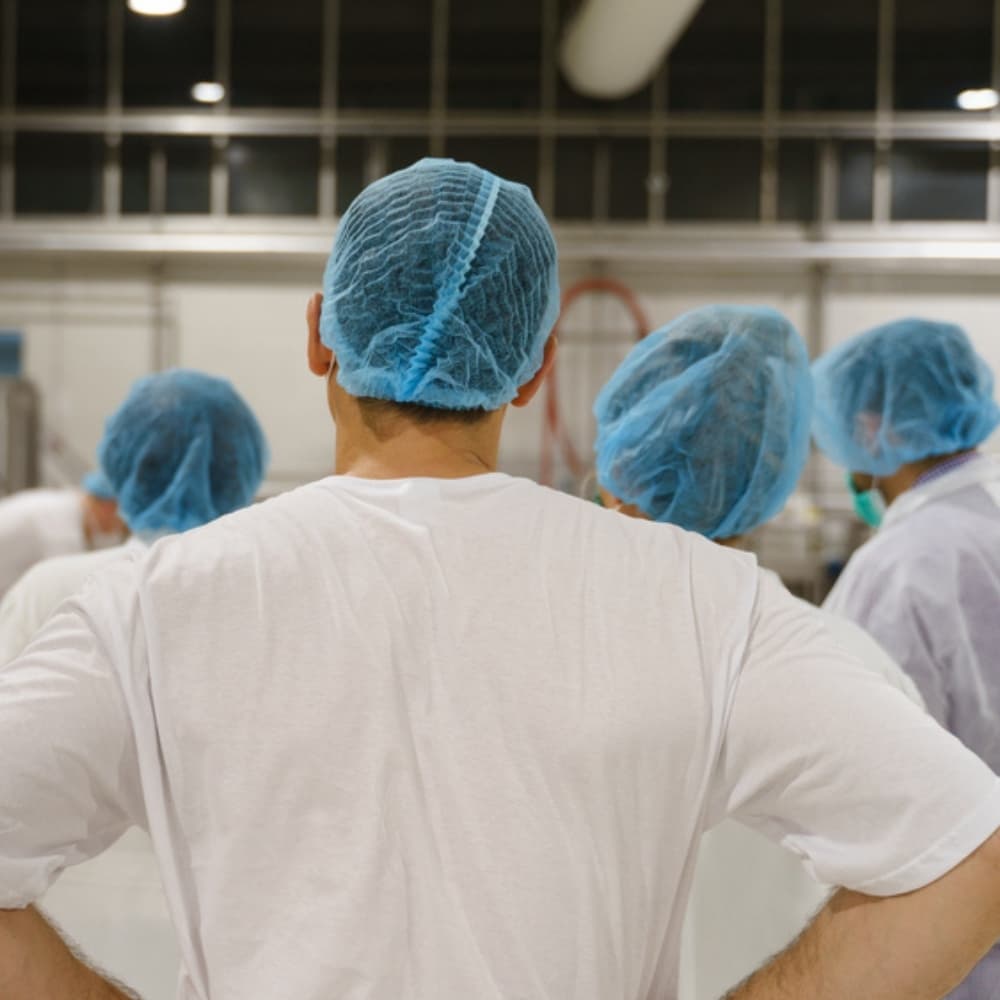
Staff working in frozen or chilled rooms wear insulated jackets, trousers, gloves and footwear to stay warm. These are reusable garments, usually issued and laundered under a separate programme, and they are bought for warmth. The disposable PPE discussed here is the hygiene layer: hair and beard covers, shoe covers, gowns or aprons where product contact or visitor entry requires them. Treat the two as separate purchasing decisions so that neither is compromised by the other.
How cold affects disposable materials
- Thin polyethylene film can become stiffer at low temperature and may crack or tear more easily when flexed, so test PE items at working temperature.
- Non-woven fabrics generally stay flexible and soft in the cold and are comfortable under thermal clothing.
- Elastic loops and cuffs should be checked in the cold, because a loop that grips in a warm room can feel different when hands are cold and stiff.
- Condensation at the door between warm and cold areas can leave items damp, so keep cartons closed and dry until use.
What is typically needed, by activity
| Activity | Typical disposable PPE |
|---|---|
| Order picking and loading, product in sealed packs | Hair net, shoe covers or dedicated footwear, beard cover where required |
| Handling open or unwrapped product | Hair net, beard cover, sleeve covers, apron or gown |
| Visitors, drivers and contractors entering | Hair net, gown or coverall, shoe covers |
| Wet or washdown tasks | PE apron, PE sleeve covers, boot covers |
Dispense and dispose at the door
Put dispensers and a disposal bin at the entry point, outside the cold room, so that people dress before they enter and discard on the way out. Items carried between zones defeat the purpose of the control. Colour coding the cold-store PPE differently from processing areas makes a worker in the wrong place easy to spot.
Specifying for the cold
- Ask for samples and test them at working temperature, not on a desk.
- Check seams, loops and closures in cold hands, with gloves on where gloves are worn.
- Choose sizes that fit over or alongside thermal clothing without restricting movement.
- Keep cartons sealed and dry until use.
- Estimate monthly volume from staff per shift, visitors and replacement rates, and hold a safety stock.
Condensation, storage and stock rotation
Moving between warm and cold areas causes condensation on surfaces and packaging. Store PPE cartons in a dry, ambient area near the entry point, not inside the cold room, and bring only what is needed for the shift. Rotate stock so that older cartons are used first, and discard any pack that has become wet or damaged. Cartons left open next to a cold-room door will pick up moisture and dust, which defeats the purpose of clean, single-use items.
Write it into the hygiene policy
Cold stores are often treated as an afterthought in hygiene procedures. Document which PPE is required for which activity, who must wear it, where it is put on and discarded, and how often it is replaced. A written rule for visitors and drivers is especially useful, because they are the group most likely to enter without the right items. Auditors check that the practice on the floor matches the written policy, so keep the two consistent.
Disponord supplies disposable hair nets, beard covers, shoe covers, aprons, sleeve covers, gowns and coveralls for food processing in bulk, with typical delivery of 7 to 21 days in total, production and shipping together. Gloves and thermal clothing are not part of our range. Send us your zone list and we will propose a specification.
Frequently asked questions
- Do cold stores need disposable PPE?
- It depends on the activity. Handling sealed packs needs less than handling open product, but visitors, drivers and contractors entering the store normally need a hair net, a gown or coverall and shoe covers, according to the plant's hygiene policy.
- Does cold affect disposable shoe covers and aprons?
- It can. Thin PE film can stiffen and tear more easily in the cold, while non-woven fabrics generally stay flexible. Always test samples at the working temperature before ordering in bulk.
- Is thermal clothing part of disposable PPE?
- No. Thermal clothing is a separate, usually reusable, purchase made for warmth. Disposable PPE is the hygiene layer worn over or alongside it.
Related products
- Head Protection
Disposable Hair Nets
Non-woven bouffant caps with double elastic band for food processing — breathable, controls hair contamination in production and packaging zones.
View product → - Foot Protection
Non-woven Shoe Covers
Breathable non-woven disposable shoe covers for dry food processing and packaging zones — bulk supply from a manufacturer and exporter.
View product → - Body Protection
Disposable Visitor Gowns
Non-woven visitor gowns with velcro front and elastic cuffs for food processing plants — also used as a lab-coat-style disposable coat for staff and QA areas.
View product →

Need disposable PPE for your facility?
Send us your requirement and we'll get back to you with a quote.
Request a Quote